Posted on 1 Comment

My first flight alone out of the circuit

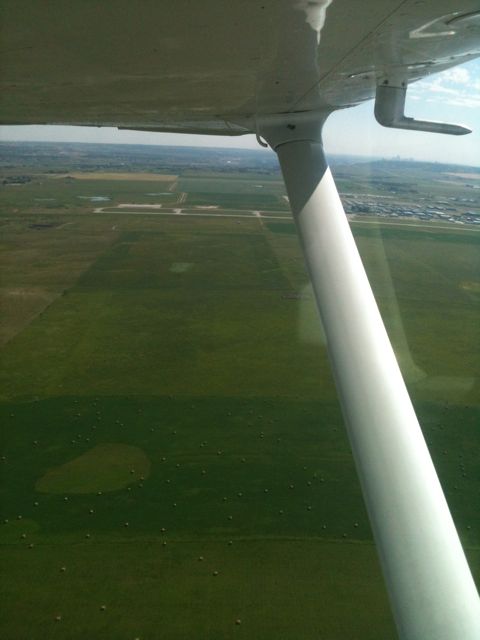
Flying back to Springbank

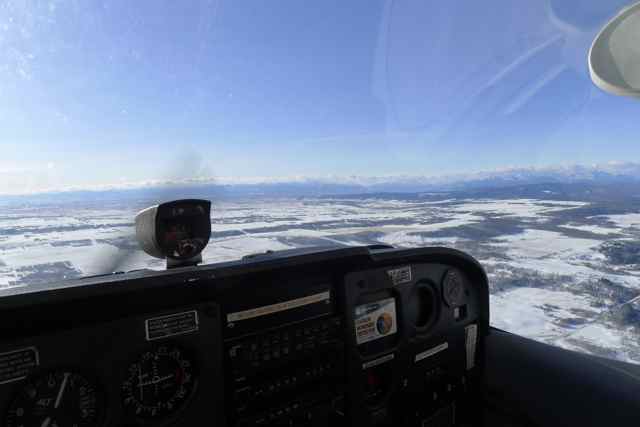
My first solo flight out of the circuit!

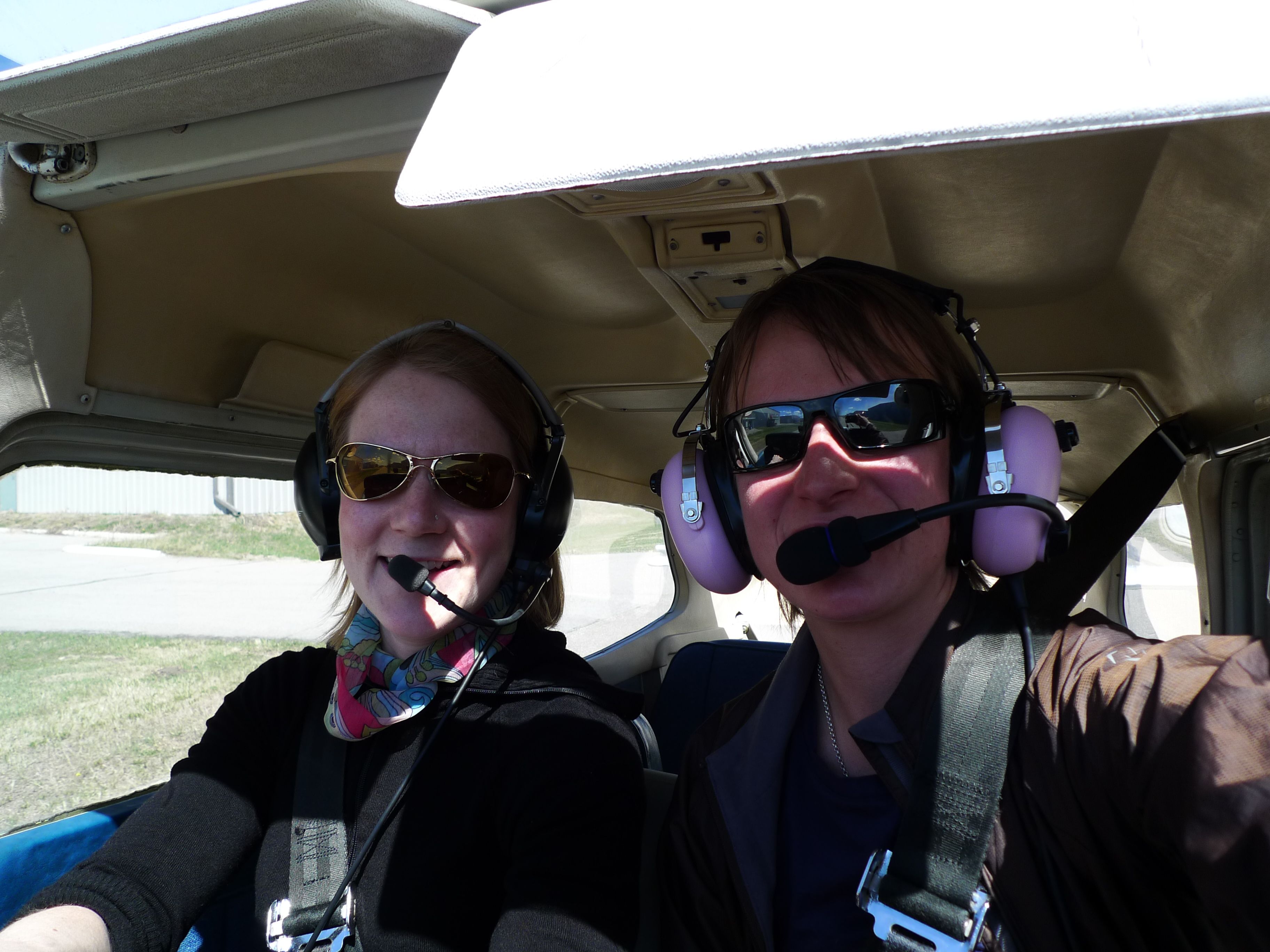
I went out on my own to the Cremona area a few weeks ago – this was my first time out of the circuit alone.  I was pretty nervous! When I go with my instructor I find some of the time I don’t concentrate on everything because they are always there as a backup. For certain things this is great, for example when it comes to keeping an eye on traffic.  But at times I find they can be a bit of a crutch – someone to rely on so you are not just reliant on yourself.  An excuse not to concentrate and relying on them to supply all the information.

But that is not right, since I am the one that wants to be a pilot, – they already are and don’t need the practice. I have to take responsibility for everything in the airplane, regardless if my instructor is there or not.  When you take passengers out for the first time, you can’t expect them to be able to help you navigate, when to switch frequencies or what altitude you should be using or to properly lean your mixture in cruise!

Enroute back to Springbank airport at 6000 feet over Cochrane

It always amazes me how much I learn when I go solo.  Before my flights, I am always nervous so I just learned to accept it as the norm.  When I go alone I am sure to be super prepared. On my first flight out to the Cremona area, I studied the map thoroughly. I looked for landmarks that would tell me when I am crossing over through airspace frequencies, and where to practice when I flew into my designated practice area.

On my first attempt, I really didn’t want to go and swore to myself that I wouldn’t try to cancel or use excuses not to go.  The forecast was good, so I had no good reason.  On the way to the airport, I did notice the clouds looked kind of “funny” – since Springbank is on the edge of the rocky mountains, we get a lot of turbulent conditions and I’ve been able to recognize some clouds that indicate this is happening.  So when I got to the airport, not surprisingly, there were lots of reports of “bumpy” flying and light turbulence particularly over Cochrane. My instructor wasn’t there to talk to, so I had to figure it out.  Some of the instructors thought I would be okay and should still go.  So I went ahead and did my walk-around and weight and balance.

More talk about light turbulence from pilots returning …

Hmm. Okay, I checked the live RVR for Springbank – winds 170 @ 5. Not bad … Trying to keep it together.

I’m close to being out the door and about to sign myself out, when yet another pilot walks in and exclaims “bumpy out there!” Okay. One more time, I check the RVR – 180@8 gusting 20. I knew it!  I’m not going up, now that the gusts have reached the ground. I probably could’ve handled it, since I’ve flown in those conditions before, but it wouldn’t be pretty.  Plus this exceeds the limits that we are allowed to fly in for student PPL pilots at my flight school.

A few days later I showed up again.  It’s 7:45 am, the sky is clear – the airport is quiet, the forecast is amazing, and surface winds are calm. It was meant to be!

I taxied to runway 25 and followed another Cessna 172 also enroute to Cremona.  It was a bit bumpy over Cochrane as usual but nothing to be concerned about.  I managed to identify all the roads and landmarks from the air, I did not get lost, and was able to find Cremona all by myself. Now I had to stop doubting myself and believe I can do it.  The practice area was free of traffic and I set up in the south east quadrant of Cremona, always making sure to keeping it in sight.

I practiced slow flight, climbs and descents, steep turns and stalls. When turning I always kept a staunch lookout for planes, and referencing my location.  Since it is uncontrolled I made lots of radio calls announcing my location and altitude.  After about 30 minutes I calculated it was time to head back. So I crossed to the east side of highway 22 to head back south. I made sure to fly in the east side of highway 22, that way, it is visible from the left side (where I am sitting).  Also, pilots that are heading south will keep the highway on their left hand side – meaning they will be west of it – giving an extra measure of safety, and as my instructor says, it’s just good airmanship.

As I cross over, I notice a Diamond crossing overhead of me about 500 feet higher. He made a call he was there, but I had no idea that he was so close. I didn’t like it, and it really made me appreciate why keeping a lookout is so important at all times.  I held my breath until it was time to call Calgary Terminal controlled airspace where they will lead me back to the CYBW controllers.  It’s comforting to know someone is watching you on radar, particularly in such a high traffic area.

Wind is calm and I’m advised to follow the north ghost route over Cochrane and to join the right base for 25.  I am too tired to do a specialty landing (don’t tell my instructor).   As I approach and land I realize how little landings I do these days.  I haven’t been in the circuit for awhile, before my flight test, I will have to return and practice landings again and again.

A great flight and day out! It’s so important to push past the fear to just get out and fly.
Posted on

“I learned about Flying from that” – Book Review

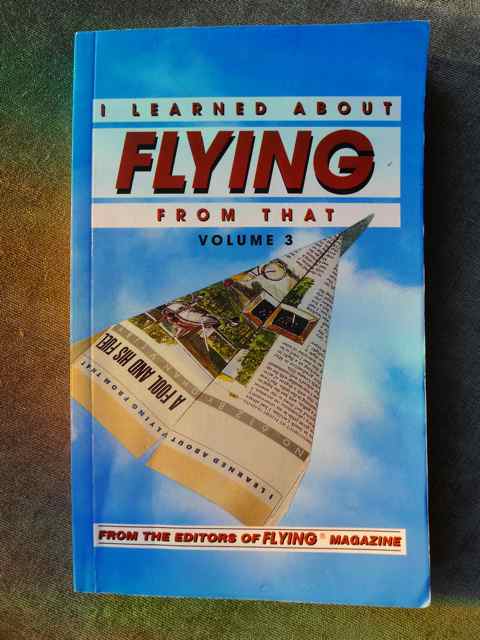
"I Learned About Flying From That" book

Book Review:  I Learned About Flying From That, Vol. 3 from the editors of Flying Magazine

I bought I Learned About Flying From That book last summer and really enjoyed reading it so I thought I’d share it.  It is a compilation of stories chronicling near-misses in flying, that were submitted by readers and originally published in the actual “Flying” magazine.  The articles are a series of entertaining stories of pilot’s real experiences of a situations that could have turned out much worse – and many times the outcome could have been much worse – and someone has survived to learn a good lesson from it.  The purpose is to alert other pilots to expect the unexpected and serve as a warning flag when things could potentially go very wrong.

The book is organized in ten different sections, each relaying a series of short stories from that topic. For example: pushing limits, fuel starvation, engine trouble, navigation, good luck, and showing proper respect, to name a few.   It is a very enjoyable read, a book you can go back to again and again to reference information, or just for an interesting read.

I found the articles both entertaining, informative, and educational.  I recommend it, it’s great for pilots and non-pilots, too.

You can purchase the book here.

What are your favorite books about flying?  If you have any recommendations, comment below.

Book Reference:

Flying Magazine, 1983 “I Learned About Flying From That.” TAB Books, McGraw Hill, Inc. Chicago, IL (ISBN: 0-8306-4281-3)


Posted on

Your Flight Instructor

Sarah and Me at CYBW

Good flight instructors, bad flight instructors

I really liked watching the show Flying Wild Alaska. It has since been discontinued.  It is a bit overly dramatic but the flying footage they have is fantastic.  The show is about a family who runs an airline a remote region of Alaska.  In the show Ariel Tweto, is featured as she is the only one in the family without a pilot’s license.  One of the last episodes I watched follows her working hard to learn how to fly.  It made me think of how important it is to  have a good flight instructor.

Ariels’ instructor seems to have an unstructured and random approach to instructing and doesn’t appear that he is very patient with her.  It may be portrayed this way through the show on purpose to make it dramatic. But …

Sarah, my instructor and me messing with the GoPro camera at the hold short line.

In the show, she is portrayed as something being wrong with her because she doesn’t get something right away and has to be reminded on each flight.  On several counts her instructor makes the statement that “if you don’t get it, then you’re out of here.”  Seems harsh.

Learning takes time, a patient instructor is crucial

Learning takes time, and I don’t actually think you’re supposed to “get it” right away.  Learning to be a pilot requires hard work, and above all time, studying, and hours, to properly learn everything to be proficient.  Even the flight training manual, the structured guide used to train pilots in Canada states that earning your license is really just a “license to learn.”  So it is strange when the show portrays shame in learning  by showing instructor roll his eyes and getting upset when she doesn’t do something properly.   It doesn’t portray the learning process accurately.

On what looks like to be one of Ariels initial flights they demonstrate stalls. This seems very early since at that stage she can’t have much of an appreciation why an aircraft stalls or what the aerodynamic properties of the stall are.  The show portrays her as a bad pilot by making it seem like she is inadvertently causing the stall.  It takes awhile for the aircraft to stall, and if she is causing it by accident on her first flight, it’s not her fault, but her instructors, who should see it coming.

Me with my instructor Atanas. He's cool, but sometimes I just want the airplane to myself!
Me with my instructor Atanas. He’s cool, but sometimes I just want the airplane to myself. No offense of course!

My first big mistake on one of my initial training flights

On my second flight, my instructor Sarah asked me to pull out the throttle as we were practicing descents.  I, still very green, confused, but eager, went for the red knob instead of the black knob – I pulled out the fuel-air mixture knob instead of the throttle, starving the engine of fuel and causing it to die!  Sarah immediately pushed it in and the engine restarted instantly.  I only knew of what happened after she calmly explained to me what I had just done, not losing her patience or getting angry.  She was the instructor and could handle any screw-up that I made.  If she had handled that situation differently, I would have been upset, and nervous on subsequent flights.   I probably wouldn’t be excited about my next flight.

I am really lucky to have had two really great instructors since I’ve started my license. I did most of my training with Sarah but she is only teaching intermittently now, so I do most of my training with Atanas. I have a lot in common with both of them and enjoy spending time with them, in the airplane but also socially, on the ground. It makes such a big difference to have a good instructor who encourages you to do your best.

A good instructor will make you feel great every time you fly, even if it wasn’t the world’s greatest flight. It’s learning, and you should try hard every time you go and feel good about your efforts. Not every flight is going to be fantastic but on every flight you will learn something.  Having that positive encouragement is what makes the difficult process of learning to fly easier to bear.

Yay for flight instructors!

What’s your flight instructor story? Comment below

Posted on 1 Comment

Slow Flight – more detail on slow flight techniques

I talked with my instructor last night and he brought up a few very good points about slow flight.

In my post about slow flight in the Cessna 172 I wrote that there are five signs that we can identify we are in slow flight;

  1. Stall horn cutting in and out
  2. low airspeed
  3. high nose attitude
  4. high power settings
  5. sloppy aileron control

But we can extend these concepts to some of the other flight surfaces.  What happens to the rudder and elevator? We know that because of a nose high attitude we are pushing the boundary layer of laminar and turbulent airflow further up the wings – hence the wings receive less smooth, laminar airflow and are subject to buffeting from the turbulent air.  This renders the ailerons sluggish and slow.

But how does this effect the tail of the aircraft?

Torque and Asymmetric Thrust

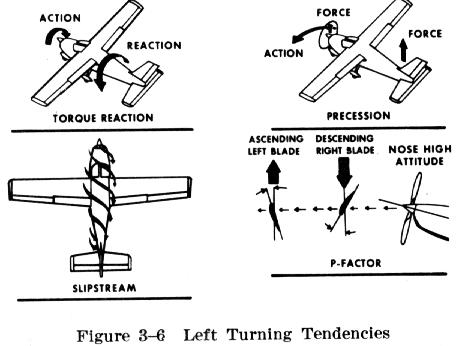
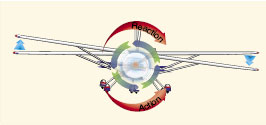
Torque causes left turning tendency. Image Courtesy of flightlearnings.com

Recall that because of torque the aircraft wants to spin counterclockwise. This is because the propeller spins clockwise (when we are in the cockpit) and the airplane is a gyroscope – this tendency is explained by Newton’s third law.  Most aircraft are designed in a way to anticipate this, so in level flight, for example, many are designed to give more lift to the wing that is being forced downward. Torque means that the plane has a left turning tendency because more force is applied to left wing than the other. But this is only for level flight. When the aircraft is out of level flight, such as a take-off attitude or nose high attitude that we experience in slow flight, the aircraft will want to turn to the left. Hence, this is another effect on controls of slow flight.

Asymmetric thrust also means that the descending blade has a greater angle of attack than the ascending blade.  This gives more lift to the right side of the propeller (as seen from the pilots perspective) and a yaw to the left.  This happens during high power settings and in high angles of attack – just like in slow flight.  In level flight, both propeller blades meet the relative airflow equally (again, the thrust issue is anticipated in the design of the propeller) and they produce equal thrust, and no left yaw.

In addition, we also talked about why we need to learn slow flight. We are not actually in slow flight on approach and takeoff, but we are very close. We do not want to be in slow flight during these maneuvers, and want to be able to recognize when we are in too close. The airplane is no fun in slow flight – the ailerons are sluggish, the nose is high so our visibility is restricted, the engine is at high power settings and very loud. So the whole point of learning about slow flight is to avoid it.  It is not a comfortable flying experience.  Yesterday I learned how to do a slow flight with almost full power settings and full flaps. It was awkward flying it in this configuration.

So, another way we know we are in slow flight is due to (6) left yaw tendencies requiring use of right rudder to correct. This will be the sixth way we can identify we are in slow flight.

Posted on

Lesson Log

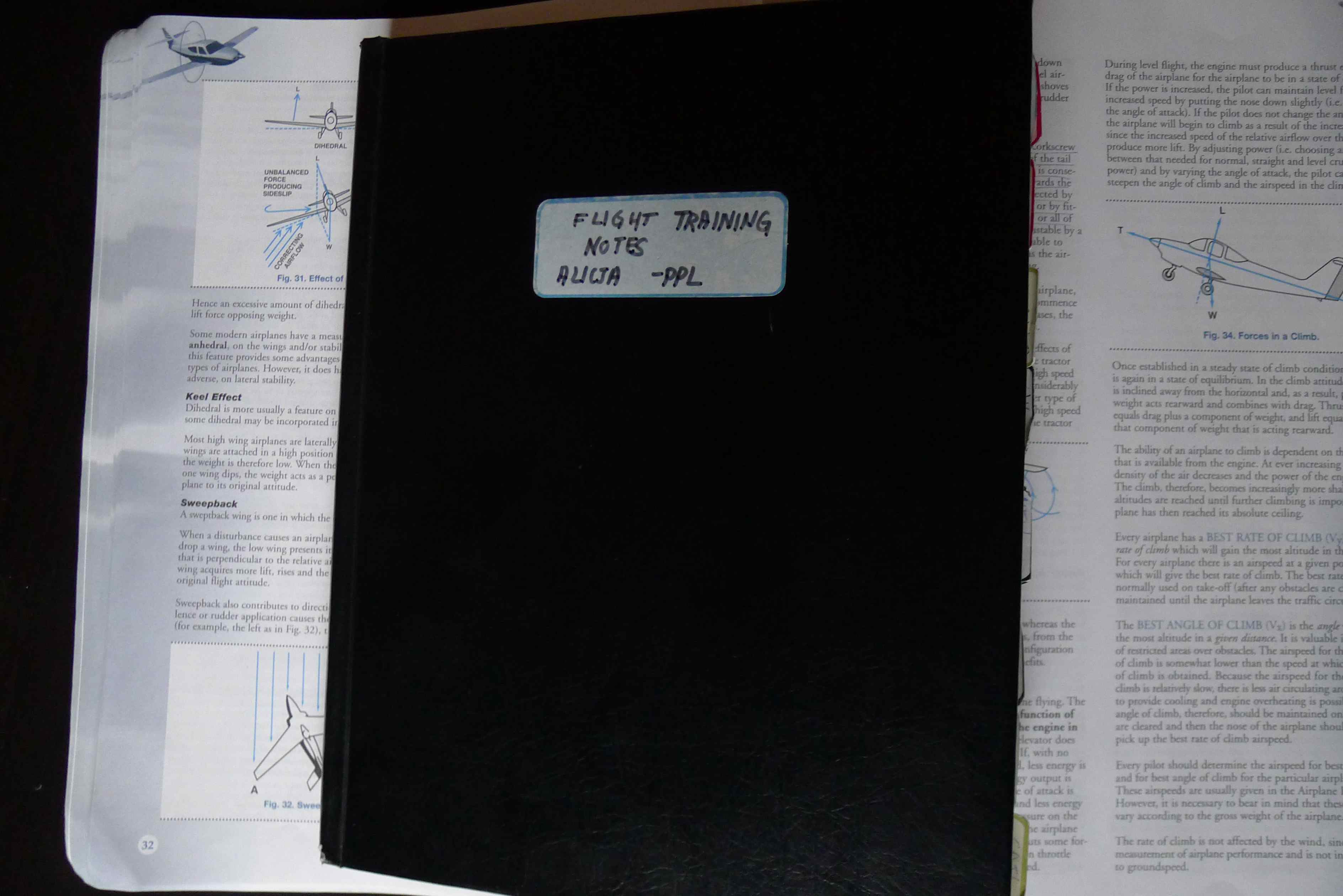
My coveted flight log

Today I read an interesting story on the Flying Magazine website about keeping a journal of “flying lessons” throughout your flying career. They suggest that it is useful to write down the things you’ve learned from every flight.  For the article, click here.

I’ve kept a log book like this since I’ve started flight training. I can’t express how useful it has been. From my first flight where I clung to the control column with an iron fist, being too scared to even look outside, to doing my first takeoff, my first radio calls, my first stalls, to gaining more aptitude, losing my fear, and being able to confidently fly on my own and take photos at the same time – it’s all there in chronological order.  It’s fun looking back at some of my old entries and seeing how far I’ve come.  There are also useful bits of information that I always refer back to. I mark important sections such as when I learned specialty takeoffs and landings – soft field and short field – and other exercises like slow flight, stalls, and circuits, for the first time.  I also highlighted the point when I switched airports and instructors.

I highly recommend a book like this during flight training. What’s more, is this type of tool can be useful throughout your flying career, since a pilot is always learning. A quote I really like is one I’ve read in a book about flying – where a student pilot asks his instructor how long it takes to learn how to fly and he responds “I don’t know, I’ve never finished.” A good motto to take along? I’m not an experienced pilot, but I know enough to know that with flying, you never stop learning.


Posted on

The Soft Field Procedure

Before I learned precautionary and forced approaches, I learned about soft field landings.  Here my account of the experience, and why soft fields are important and should be practiced regularly.

When will we use a soft field landing?

If we are planning to land on an unprepared surface. We also need to know the technique if we need to make a precautionary or forced landing, and have to put our airplane down in a field.

Like the short field procedure, the soft field is a lot of fun.  It is used when taking off and/or landing on an unprepared surface. The can be a grass strip or turf runway, or a completely unprepared runway.  One of the main goals is to protect your propeller and engine in the sequence. This means we try to keep it from being struck by flying debris and damaged, and to keep dirt and debris from being sucked into the engine.   It also is to keep the nose gear from diving into a hole – since it is an unprepared surface there may be lots of surface irregularities.  A small dip and we could wheelbarrow the plane.  We keep the nose high throughout the procedure as long as we can.

It starts during the taxi

Can I land my airplane in that field?
Can I land my airplane in that field, and what is the technique?

In fact, when we taxi on the unprepared runway we keep our control column full aft.  So when we pull up to line up on our runway we are pulling back as far as we can on the control column.  When we add power, we push forward slightly on the column until the airplane is ready to fly.  We rotate at about 46 knots with 10 degrees of flap in the 172 N model.

We fly in ground effect until we have built up enough airspeed to climb.  This is about 60 knots, so when we reach 60 knots, we pull up and climb out.  At 200′ AGL we announce that we have “two positive rates”

(1) altimeter increasing (showing a gain in altitude), and

2) vertical speed indicator increasing, and we retract the flaps and climb out normally at 70 knots.

Hold off on the landing

The airplanes POH will show us what speed to approach for our soft field landing.  In the 172, we use 61 knots.  The idea on the flare is try to hold off landing even longer than usual to keep the airplane nose high.  So after we flare and we feel the first “sink”, we add a bit of power, around 100 RPM or so and try to keep the airplane from touching down. We do so until we have run out of altitude, and the airplane will touch down very softly.  We keep the nose high to protect the propeller and keep from nose gear from running into rough terrain.

Soft field touch and go’s are probably the most fun of all – we do not push the nose down, and take off right away in a nose high attitude.  That means we stay off the nose wheel and just do a “wheelie” down the runway, and take off! In my solo I managed to make this happen a few times.