Posted on 1 Comment

Top ten reasons why you should never learn how to fly

Flying? Boring! Why would I ever want to do it? Aside from being expensive and time consuming,  it’s also pointless. Why would I want to shoot around the sky in a metal tube?  It just seems like a poor use of time. Seriously, only those with poor judgement would consider getting a pilots’ license.  There are just so many reasons why you should never do it, but here are the top ten that I could think of.

1.  The view sucks.  Why would I want to see the world from 3000 AGL?  I have such a hard time picking out my house from the plane, it’s so much easier if I’m driving around in my car.  The world just looks so big from the air and it’s really not that interesting.  I’m just not interested in seeing the bigger picture.

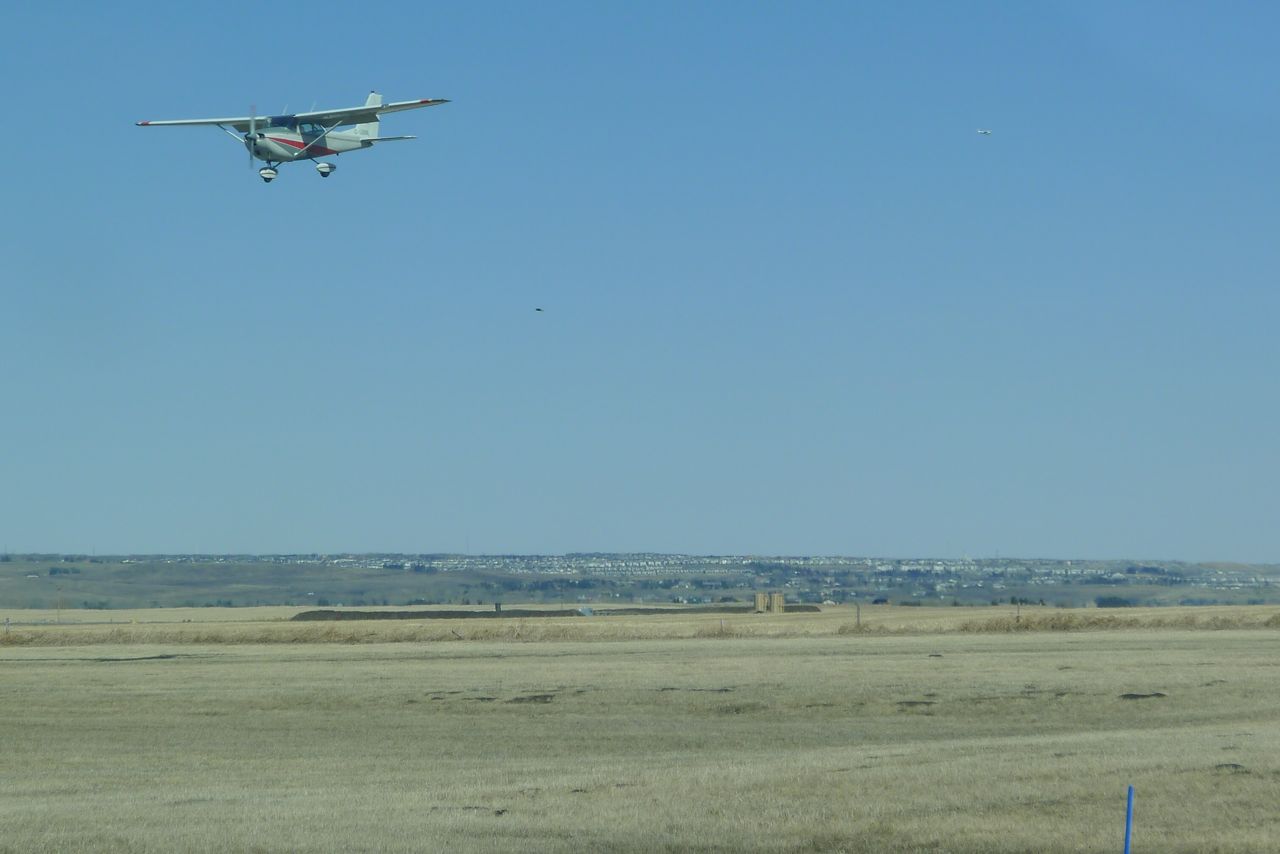
These guys are always bossing us pilots around. You'd think they own the airspace or something.
These guys are always bossing us pilots around. You’d think they own the airspace or something.

2.  Airports are boring.  Nothing interesting happens at airports. Seriously, flight schools talk about teaching you soft field landings and precautionary/forced landings, but never actually let you do them, always forcing you to return to the airport. How about some danger? I’ve seen Top Gun – I’m ready!

3.  Air Traffic Controllers are bossy.  They constantly tell you what to do and they talk so fast that you can barely understand them most of the time.  And they always tell you to switch frequencies and get upset if you don’t call them.

4.  Too many calculations. You really have to learn how to flight plan to learn how tedious and pointless it is.  Just point the airplane in the direction you want to go – how much harder does it have to be, people? Fuel, schmuel. I’ll just keep an eye on the fuel gauge like I do when I drive. What could possibly go wrong?

5.  No in-flight entertainment.  Unless you count your instructor, there is no real source of entertainment when you’re flying.  No movies, TV, music or anything. No hot coffee. The service stinks.  Why would I want to sit in an old uncomfortable 30 year old Cessna when I can comfortably stretch my legs out on the couch like a human being.  When I stretch my legs out in the Cessna I just end up hitting the rudder pedals, which causes yaw and I have to do more work to correct it.  Can’t relax in the thing for a second.

6.  Flight instructors are annoying.  They are always telling you what to do and bossing you around. It’s worse than ATC because you can’t really get away from them.  Once you leave the control zone you are free of the claws of terminal control but you can’t get rid of your instructor once you let them in the plane with you.  They really don’t know that much … How much can there possibly be to know??

7. Too much safety emphasis.   Do you know how long it takes to prepare to actually go on a flight that lasts less than an hour? About two hours. Checklists, meetings, briefings, log books, journey log books, sheesh. So much paperwork and so many safety checks. I mean, did you know when you’re at the hold short line that you have to check your engine is operating? It started, so why do you need to check it again? Obviously it’s working and the plane is ready to go.  If it wasn’t it wouldn’t start. Obviously.

8.  Trainer planes are old.   Trainer planes are so old, I think they must have been built when dinosaurs roamed the earth.  They are loud and uncomfortable.

9.  It’s too hard.  The instrument panel in your car has only a few sources of information: speed, fuel quantity, engine temperatures and some have a tachometer.  The most basic airplane panel has six highly confusing instruments which are really hard to understand, ever mind all the other engine instruments, radios, direction finding equipment, navigation tools, approach systems, and the little floaty thing on the dash.  There are so many maneuvers, attitudes and movements too learn, it’s just seems like way to much work.

10.  It’s scary.  The whole concept of flying just seems like a bad idea.  There are just too many planes of movement.  It’s not that rewarding, and not really fun to be in control of the thing.   Constant briefings, meetings, exams, preparations, paperwork and safety checks.  Soaring through the air?  Make a career out of it? Seriously why bother. I’d rather just sit on the couch eating chips.

We hope you had a good laugh reading this.

Sarcasm aside, ever try to talk yourself out of getting a license?  So many reasons. The fact is that flying is hard, committing wonderful and very rewarding.  Like many things in life, if it wasn’t hard, it wouldn’t be worth doing.   Challenge yourself and don’t give up.  Search your soul and if you discover flying is right for you, you will have the time of your life and you will not regret it!


Posted on

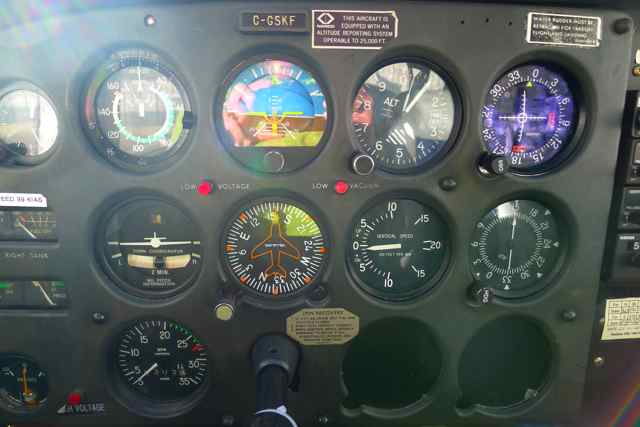
The ‘six-pack’ flight instruments: gyroscopes

Continuing on our review of the ‘six pack’ of flight instruments from the instruments that are powered by the pitot-static system, below we review those that are gyroscopes.

A gyroscope is a rotor or spinning wheel rotating and high speed,  and exhibits two fundamental characteristics upon which all practical applications are based.  These are:

  1. Gyroscopic intertia –  or rigidity in space. This is the tendency of the rotating body to maintain it’s plane of rotation if undisturbed.
  2. Precession: This is the tendency of the rotating body, when a force is applied to it at a point perpendicular to the plane of rotation to react as if the force had been applied 90 degrees in the direction of rotation

The three gryroscopic instruments are:

  1. The heading indicator. The main instrument we use to detect heading of the aircraft.  Only operates when the engine is running.  It runs off a vacuum system so we have to adjust it to the magnetic compass every time we fly. Frictional forces in the gyro bearings cause it to precess, resulting in a creep or drift in reading approximately 3 degrees every 15 minutes.
  2. Turn and bank coordinator, sometimes called the needle and ball.  The needle shows the direction and approximate rate of turn. The ball shows the amount of bank in the turn and whether there is any slipping or skidding. The ball is controlled by gravity and centrifugal force.  In a coordinated turn, the ball will be in the center as the centrifugal force offsets the pull of gravity. The instrument reacts to yaw but can be used for roll control since the aircraft yaws when banked.  It can show a rate one turn which gives us 3 degrees per second or a two-minute turn.
  3. The attitude indicator. Modern attitude indicators have virtually no limits of pitch and roll and will be accurate indicate pitch up to 85 degrees, and will not ‘tumble’ in 360 degree rolls.

The instruments are typically powered by the vacuum system and an electrical system for redundancy in case one of the power sources fails.  Often the heading indicator and attitude indicator operate on the vacuum system while the turn and bank coordinator is electrically operated.

Posted on 1 Comment

Slow Flight – more detail on slow flight techniques

I talked with my instructor last night and he brought up a few very good points about slow flight.

In my post about slow flight in the Cessna 172 I wrote that there are five signs that we can identify we are in slow flight;

  1. Stall horn cutting in and out
  2. low airspeed
  3. high nose attitude
  4. high power settings
  5. sloppy aileron control

But we can extend these concepts to some of the other flight surfaces.  What happens to the rudder and elevator? We know that because of a nose high attitude we are pushing the boundary layer of laminar and turbulent airflow further up the wings – hence the wings receive less smooth, laminar airflow and are subject to buffeting from the turbulent air.  This renders the ailerons sluggish and slow.

But how does this effect the tail of the aircraft?

Torque and Asymmetric Thrust

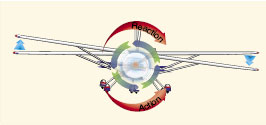
Torque causes left turning tendency. Image Courtesy of flightlearnings.com

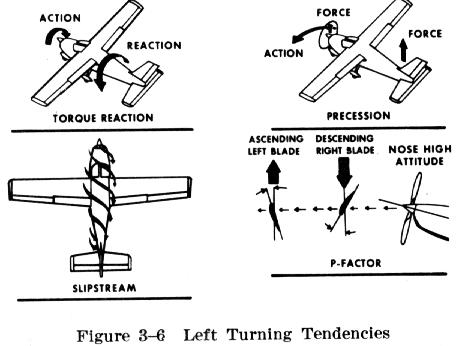
Recall that because of torque the aircraft wants to spin counterclockwise. This is because the propeller spins clockwise (when we are in the cockpit) and the airplane is a gyroscope – this tendency is explained by Newton’s third law.  Most aircraft are designed in a way to anticipate this, so in level flight, for example, many are designed to give more lift to the wing that is being forced downward. Torque means that the plane has a left turning tendency because more force is applied to left wing than the other. But this is only for level flight. When the aircraft is out of level flight, such as a take-off attitude or nose high attitude that we experience in slow flight, the aircraft will want to turn to the left. Hence, this is another effect on controls of slow flight.

Asymmetric thrust also means that the descending blade has a greater angle of attack than the ascending blade.  This gives more lift to the right side of the propeller (as seen from the pilots perspective) and a yaw to the left.  This happens during high power settings and in high angles of attack – just like in slow flight.  In level flight, both propeller blades meet the relative airflow equally (again, the thrust issue is anticipated in the design of the propeller) and they produce equal thrust, and no left yaw.

In addition, we also talked about why we need to learn slow flight. We are not actually in slow flight on approach and takeoff, but we are very close. We do not want to be in slow flight during these maneuvers, and want to be able to recognize when we are in too close. The airplane is no fun in slow flight – the ailerons are sluggish, the nose is high so our visibility is restricted, the engine is at high power settings and very loud. So the whole point of learning about slow flight is to avoid it.  It is not a comfortable flying experience.  Yesterday I learned how to do a slow flight with almost full power settings and full flaps. It was awkward flying it in this configuration.

So, another way we know we are in slow flight is due to (6) left yaw tendencies requiring use of right rudder to correct. This will be the sixth way we can identify we are in slow flight.