The highly anticipated NextGen area navigation, a type of RNAV equipment is now available at At Dallas / Fort Worth International Airport (DFW). It has been very successful, allowing the airport to accommodate practically a tripling in departures. In fact, NextGen satellite procedures allow for a 15-20% increase in departures per hour in congested periods.
What is RNAV?
RNAV is area navigation, which allows IFR aircraft to choose any route between a network of navigational beacons for route finding. Rather than flying from beacon to beacon, aircraft can fly any route within the coverage of station-referenced navigation signals. This allows lots of flexibility since aircraft can fly a straight course rather than zigzagging to and from beacons. The beacons are satellite serviced.
Ground based RNAV is serviced by satellites and onboard technology. Image from faa.gov.
RNAV was introduced in the 1960’s and slowly waned in popularity as airlines began to favour inertial navigation systems rather than ground based navigation aids. RNAV was re-introduced after the massive introduction of satellite navigation. The procedure uses a combination of onboard equipment and satellites to ensure that aircraft follow a precise path and heading. Conventional RNAV procedures begin only once the aircraft is airborne, while ground based RNAV, such as the one at DFW, begins on the runway.
RNAV departures at DFW. DFW is the fourth busiest airport in the world by aircraft movements. Image courtesy of Boeing.com
How does NextGen work?
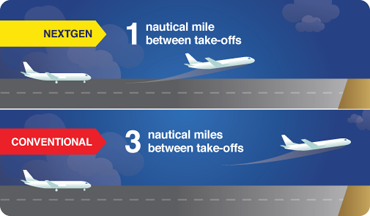
NextGen starts working on the ground and only requires one nautical mile between departing aircraft. This system begins service on the runway and is provided to the aircraft as it enters high altitude airspace.
Conventional departure procedures, which require more correspondence between the pilots and ATC, call for separation minimums with departing aircraft of 3 nautical miles between take-offs. Those two miles make a difference. American Airlines, who is responsible for 80 per cent of DFW departures, has already reported an increase in throughput of between 10 – 20%.
Most aircraft use RNAV when they are in the air, however the difference at DFW is that RNAV navigation starts on the runway – on the ground, and not in the air. Hence separation is provided before takeoff allows smaller separation minimums to be observed.
In a congested airport like DFW, this really does make a difference. Less aircraft idling and waiting means fuel savings. Approximately 95% of the commercial jet fleet at DFW is equipped to fly RNAV. DFW is one busy airport – as you can see in the image above. In fact, it is number four in the world for aircraft movements, tallying 650,124 movements in 2012.
What are the benefits?
RNAV allows to conserve flight distance, save fuel, reduce congestion as well as allow flights into airports without beacons. RNAV beginning on the runway offers more time and fuel savings, for example, American Airlines has reported an annual fuel savings of around $10-12 million at DFW due to these improved RNAV technology. This will also improve local air quality.
Reduces possibility of verbal communication error
Since RNAV provides a pre-determined flight track programmed in the aircraft’s flight management system, this means less communication with pilots and ground controllers. This is more expeditious than the regular procedure, in which the controller gives the pilot a heading and the pilot will acknowledge it verbally. This gives less chance for a miscommunication to happen, and the FAA reports it has already decreased pilot-controller verbal correspondence by over one third. This gives controllers more time to concentrate on traffic that requires more complicated instructions.
This is a very popular technology that will likely be introduced at many congested airports worldwide.
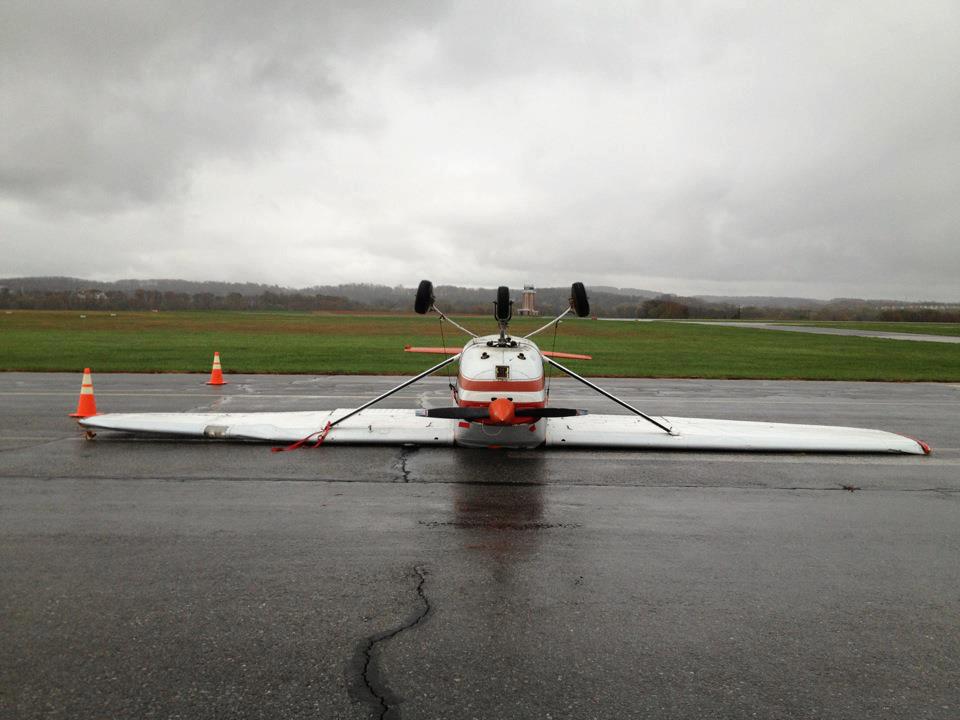
This video is a good example of what can happen if you don’t keep your plane tied down!
This low wing, 2-seater aircraft is parked with only wheel chocks holding it in place. Considering that the plane actually takes lift in this video the wind must be blowing well in excess of 40 knots. We’ve certainly had more than our fair share of winds that strong or stronger at CYBW (and most of Southern Alberta for that matter), so it’s not difficult to imagine this could easily happen to our planes should they not be hangared and tied down.
Can anybody tell what kind of aircraft is in this video?
Heavy winds are common in this area due to the effect of the nearby mountains. This fall, we had 6 days or more each month from September to December when the wind was blowing in excess of 25 knots. This also includes two days per month that the wind was blowing in over 30 knots.
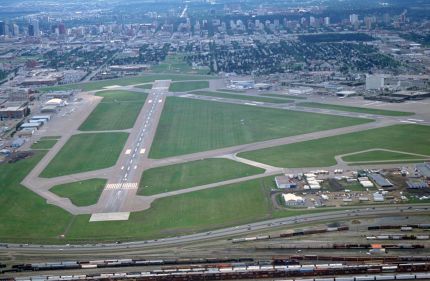
The Edmonton city centre airport, or Blatchford field is a historic Canadian airport with a rich aviation history. On November 30, it closed via issuing NOTAM to the aviating public.
Officially closed
As per CARS (Canadian Aviation Regulations), crews put white X markers along the length of the remaining operating runway 12/30. The other runway, 16/34 was closed over 3 years ago. The CARS states that, any aerodrome not in service, must have yellow or white X’s, 6 meters in length along the runway. These markings must be visible from the air. An aerodrome closed permanently must remove all markings except for these X’s.
It’s sad to see them rolling those white X’s at CYXD.
Crews closing the City Centre Airport permanently. Image courtesy of Global News.ca
The airport was officially closed at 5 pm of November 30. You can see by the image on the left, rolling out the white X markings at dusk at only 5 pm – how early it gets dark in Edmonton that time of year!
Canada’s first licensed airfield
Blatchford field was created in 1929, after Edmonton city council authorized $35,000 to be spent on the airfield (this is over $462,000 in 2013 dollars) and became Canada’s first licensed airfield. Keith Alexander Blatchford was major of Edmonton from 1924-1926. It quickly became a hub and allowed Edmonton to boom even during the great depression and was the busiest airfield in Canada.
Where the magic of flight began
I started my journey into flying at City Centre, or CYXD – lovingly known also as the “muni” by local pilots. Convinced that flying was a great idea, my timing was a bit off – I was still in graduate school and didn’t understand the seriousness of the commitment I was making – and the fact that aviation would change my life forever. I enrolled in ground school and took my first few flights.
Flying out of CYXD was a lot of fun, I would rush from the university, drive through downtown, and in just a short little drive and there was the airport and flight school. It was so close and convenient. It was also a fabulous place from which to fly. Nothing really compares to the approach to 30, flying along the North Saskatchewan river over downtown.
Site of the Grand Prix
The airport was a tight community of aviators and the site of many outdoor events. For example, starting in 2005, the airport became the site of the Edmonton Grand Prix Champ Car race, merging with the Indy and Nascar leagues. They used a portion of runway 16/34 as part of the race track.
Challenges at CYXD
As the airport got older, newer aircraft got bigger and required more runway. The airport needed to be expanded but this was challenging due to it’s central location. The increasing runway requirements of larger jets made operation at CYXD impossible. In time Fokker F-28 and 727-100’s operated from the airfield. However the newer models of these aircraft had larger range and increased weight and runway length requirements made using city centre uneconomical, hence these carriers moved to CYEG, Edmonton international. In it’s final years, it was used primarily for flight training, medevac, general aviation and air charter.
Operating restrictions due to central location
Due to it’s central city location, the airport had several curfew and noise abatement procedures. Strict noise regulations were enforced from 22:00 until 7:00 hours local time. As well, there were height restrictions on all the downtown buildings due to safety measure for approaching and departing aircraft. No building could be built higher than 150 meters. The buildings in downtown Edmonton could not be built above this height due to safety clearance for aircraft.
Closure the result of a long debate
The debate about whether or not to keep the airport open started earlier, in 1992, but in 2009 the process began to begin a phased closure of the airport for certain. The airport had two runways, 16/34 and 12/30. On August 3, 2010, a few short months after I started flying there, an issuing NOTAM officially closed runway 16/34 at 3 am of that day. We were left with 12/30.
The closure of that runway was largely seen as a political “phase out” move, as having this runway closed did not give the city any extra land to work with. But it sent a strong message that the airports fate is sealed. It will only be a matter of time before it is closed, and that was perhaps the real reason for the phased runway closure.
A special closing ceremony
The closure of the 90 year old airport was marked by several events, one of them a scheduled fly-by of two Royal Canadian Air Force CF-18’s. The flights were grounded due to weather. It seems mother nature was not thrilled about the closure! A Boeing 737 belonging to the Alberta Aviation Museum made it out just a few days before the closure. Though the museum gets to stay, the plane does not fit in with new property boundaries, hence the plane needed to be moved. There was some doubt whether or not preparations could be made and permission granted in time and of the closure, but everything went well.
What will happen to the land?
Most of the area will be developed into a ‘green’ residential community in Blatchford Redevelopment. The new community will bear the Blatchford name as part of homage to the airfield and it’s history. Some land will be transfered to NAIT (The Northern Alberta Institute of Technology).
Flight schools and charters moved from the area slowly over the years, not knowing when the ‘shoe would drop’ and the City would begin shutting down the airport. When it finally happened in September, with a firm closure date, businesses were ready to move. Most businesses moved to Villeneuve, Alberta, CZVL, about 35 km north west of Edmonton. Villeneuve features runways 08/26 and 16/34 (identical to Springbank).
Boeing 737 GIPW: final take off from CYXD to new home in Villeneuve. Image from: Global News
Impediments to municipal growth?
Due to approaching and departing aircraft, no building in downtown Edmonton could be built higher than 815.34 metres (2,675.0 ft) above mean sea level. This means about 150 meters above downtown. The height restrictions of downtown buildings have impeded several urban projects from proceeding, projects that have been deemed vital to urban densification and allowing more people to live centrally. Activities due to flight activity make developing compact urban neighbourhoods challenging. The tallest building is the Manulife building, rising 150 meters above runway threshold. Without the airport, the restrictions are dropped and the tallest building could be built to 312 meters, over double the height of the tallest building.
The height restriction is certainly not an impediment to growth – the city of Vancouver also has limits to protect the view of the North Shore mountains, in Montreal the limits are about 200 meters, Paris recently moved restrictions to allow buildings taller than 35 meters to make the Eiffel tower to dominate the skyline. Washinton D.C. also has height restrictions, with buildigs in central areas are generally not higher than 50 meters. Are those not great cities?
The reason is to control sprawl, however, many cities, Calgary has a problem with urban sprawl and there are no height restrictions due to central airport activity. So though there are reasons for the closure, as a pilot, I find it sad and upsetting.
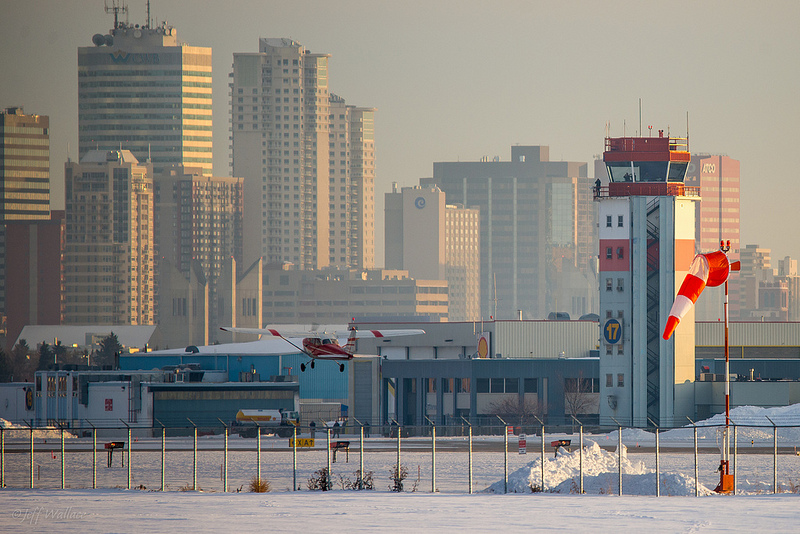
The last aircraft to depart City Centre Airport before it was permanently closed. This lovely image was taken by Jeff Wallace and retrieved from flickr.
The last flight departed CYXD on November 30, a 1963 Cessna 172D. Ident C-FWKV flown by Mr. Chris Blower.
The airport closed with this final departure and with a helicopter salute. It makes me a little misty eyed to watch the heliopters hover outside the control tower. This will be the last flight they observe from that tower.
Goodbye CYXD, and thanks for all the good memories. I’m glad to have been a part of your history.
A “stranded” 737 A Boeing 7370-200 was an exhibit at the Alberta Aviation museum since 2005. This retired airplane was in service for Pacific Western Airlines starting 1979 and flew out of City Centre, CYXD, which closed on November 30, 2013. In fact, the runways at CYXD were built in mind to keep the maximum performance and weight of this aircraft. The real reason the runways are the length they are is to give ample amount of runway for the airliner to be able to operate from that airport.
After Pacific Western Airlines folded it belonged to Air Canada until it was retired from service. The Alberta Aviation museum is staying at it’s current site but it was learned that the 737 would not fit in the property lines allotted to the museum, hence the plane has to be moved – if not it would have to be destroyed! It took volunteers months to make the plane airworthy and suitable for flight. Since the plane is valued at $1.6 million, it was worth it to obtain permission to move the plane.
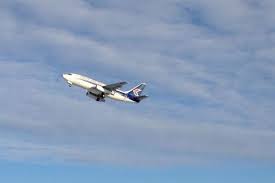
It took volunteers just three and a half months to do something that would normally take 8 months or more. Then finally, the day before the airport was scheduled to close the airport, final checks were completed and the airplane was given permission to fly. In the afternoon of November 29, the 737 took off in afternoon light for the last time. It was a bittersweet moment for many.
What do pilots like? Well aside from the obvious, airplanes, there are numerous things that you can buy for your favourite pilot friend or family member or simply any aviation enthusiast.
Coming up with holiday gifts can be tough but for gadget loving aviators, there are lots of options from small to luxurious. Most aviators love everything airplanes!
1. Aviator sunglasses
Ray Ban RB 3025 Aviator Sunglasses
With the sun shining in the eyes, protective eyewear in the cockpit is a necessity. Even in wintertime and on overcast days, it is so bright outside that you simply cannot do without sunglasses. Aviators are important because they have thin arm bands that fit under the ear cups of the headset. The arms of standard sunglasses are not compatible with the other cockpit necessity – the headset. Most arms are thick and push out the seals on the ear cups and are uncomfortable.
I have recently come across “Flying Eyes” brand eyewear, and I think they would be a great idea. These glasses have an adjustable cord instead of arms, that fits around your head and won’t obstruct your headset. The glasses also come with fixed plastic arms that you can use outside of the cockpit.
Other nice aviators are made by brands such as Ray-Ban and Oakley. There is lots of choice out there. Many are compatible with prescriptive lenses.
2. Flight Paraphernalia
Do they have a sense of humour? Pilot paraphernalia is always a fun gift.
From t-shirts, to mugs, to wall and desk clocks to doormats, coasters, stickers to jewellery, there is a lot of choice. There are hats, weathervanes, ties and license plate frames. I’ve even seen a runway mat beach towel. Seriously. If you think of something, likely it’s available with a humorous aviation twist.
The classic “Remove before Flight” keychain or t-shirt is always a great idea. I’ve got one, and a lot of my pilot friends do too.
3. Movies and shows about flying
Many pilots love any aviation-themed movie – think of the cult classic Top Gun. Most of my pilot friends have a copy. Other favourites include Flight, Disney’s Planes, Ice Pilots, Arctic Air or the Aviators TV Show. The show MayDay is one of my favourites however only the older shows are available on DVD.
4. Flight Bag
Jeppesen captain flight bag. Image from Pilot Mall.com
There are numerous choices here. I have a pink flight bag from Powder Puff Pilot that I regularly use, but there are lots of nice ones (and not so nice ones) out there! The pink bag is definitely a great gift for the female pilot.
When you are selecting a bag, basically you need a bag big enough to fit a headset, notebooks, an iPad, charts, maps, books, a water bottle and snacks. The bag should have an outside pocket for small items such as pens and a few outside pockets on the side, and an interior big enough to house the main items.
If you want to spoil your pilot, check out the Classic Flight Bag, made of hand-cut leather, it’s rugged, durable and very stylish. The bag is just under $500 and features one large back pocket, two smaller pockets on the side, and a detachable and adjustable shoulder strap. Very nice quality.
5. Headset
Flying with my pink ANR headset from Powder Puff Pilot.
Every pilot needs their own headset. Again, I’ve got a pink headset from the same company (Powder Puff Pilot) which I like. There are lots of options available here, starting from lower end (under $150) to high end ($1000 and up). Consider how much your pilot flies and whether or not they are considering a career in aviation. If they are a more casual pilot, a less expensive but still good quality headset would serve them well.
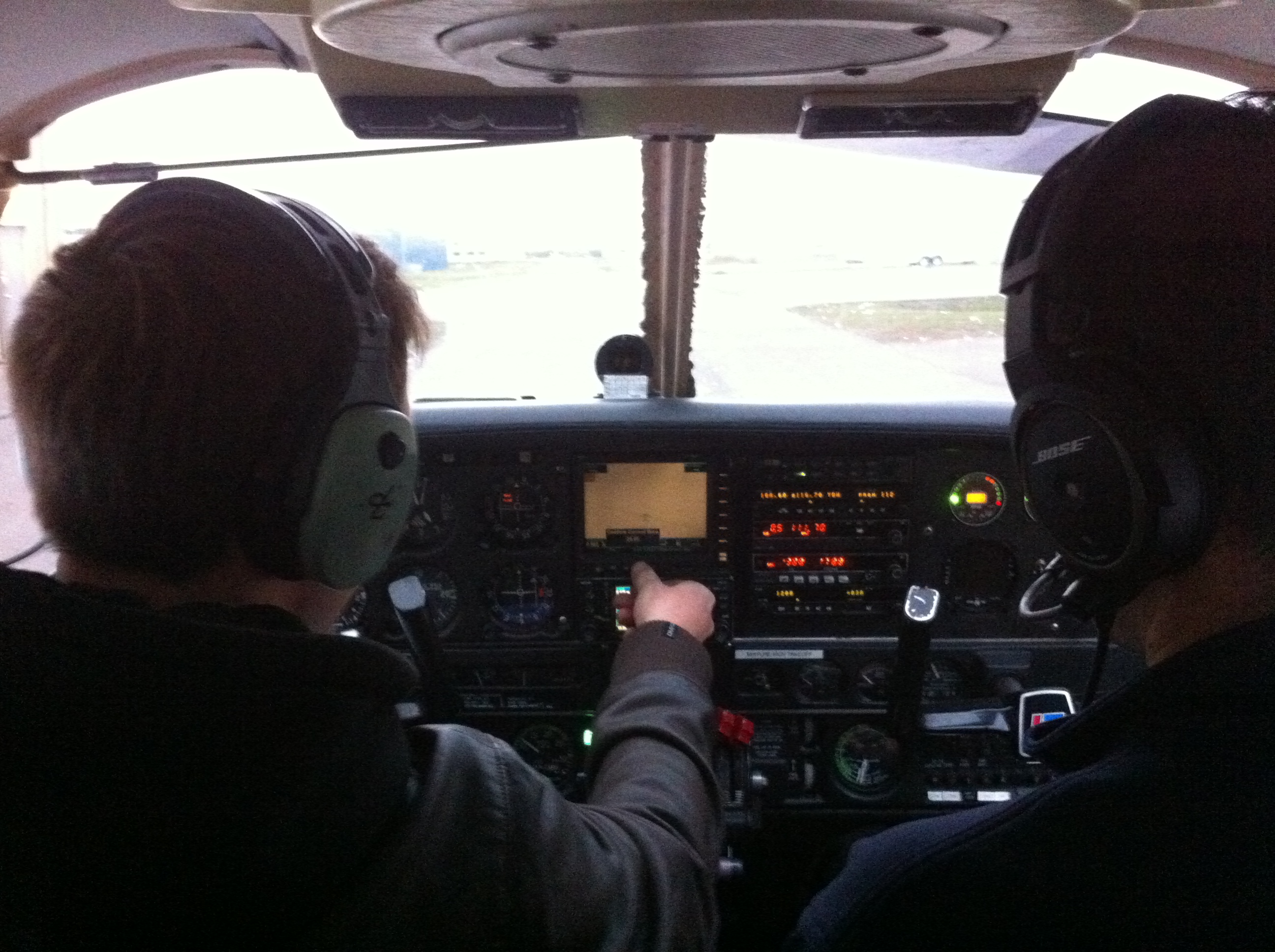
Again, if you want to spoil them the most high-end styles are the Bose and Lightspeed Zulu. I’ve also read that Sennheiser makes very nice headsets and they are quite a bit less expensive than the Bose and Lightspeed. For example the Sennheiser S1 Passive headset is priced under $400. The David Clark brand also has lots of options.
Higher end headsets will have better noise attenuation (they will be quieter) and have a better fit. Lower end headsets often rely on thick ear cup padding to provide most of the noise buffering and some of them can be quite tight on the head and heavy, which is not great for long flights or regular, daily use.
6. Foreflight subscription
The ForeFlight Software for iPhone
Foreflight is one of the most popular flight-planning software out there, and it’s sold on a subscription basis. If your pilot has a iPad or other tablet, or an iPhone, they will appreciate the simplicity of this app. In this app you have your maps (VNC and VTA), IFR enroute charts, instrument procedures, and documents (iPad only). You also get full screen weather maps, airport data, plates, SIGMETS, AIRMETS, NOTAMS, real time map imaging with either IFR or VFR maps. There is less to carry around when you have this app!
The app is sold on a subscription basis, and a standard subscription for the U.S. costs $74.99 and a professional $149.99. The app now has updates for Canada, and a Canadian subscription will cost $149.99 for the year.
7. Kneeboard
Those most pilots will have a regular kneeboard, many pilots now use an iPad or other tablet for flight planning, maps and calculations and not paper. An iPad kneeboard is a must have in this case, it keeps your iPad conveniently on your leg so it doesn’t slide around, and a comfortable elastic strap goes around your knee without the bulk.
A kneeboard makes a great gift. It was one of my first gifts I received when I started doing my pilots license.
8. Electronic Flight Computer
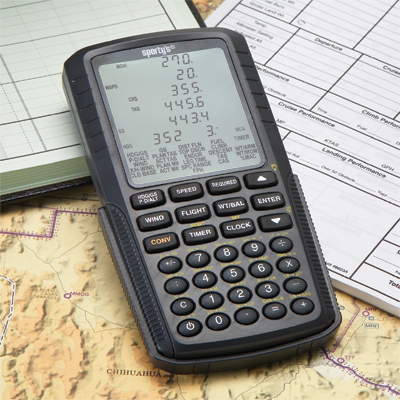
Flight Computer from Sporty’s pilot shop
Most student pilots use the E6B, a manual flight computer that does unit conversion, fuel burn calculations and calculates wind correction angle, density altitude, among many other things.
Consider getting them either a nice metal E6B, while it’s also a manual computer it’s made of metal and is a lot more robust than the paper one that comes with most ground school kits. Nicer calculators like an electronic E6B are a great gift and priced around $60. They do all the same calculations and more convenient and quick.
9. Flight Review or training DVD’s
Almost everyone who flies, no matter if they are working on their license or already a working pilot, can appreciate a bit of a skill brush up. Many manoeuvres are seldom practiced past flight school. For example, stalls, precautionary and forced landings or things such as steep turns which don’t have much use in ordinary flight. But they are important and those skills need to be retained and reinforced. A review DVD or book can give an entertaining take on the basics to keep their skills sharp.
You can even buy whole courses such as the instrument training course, and more. So if they are considering doing more training you can buy them an online course so they will have a head start.
10. Refresher course with an instructor
Not into books or DVD’s? Another idea is to buy your pilot a refresher session with an instructor at your local flight school instead of an instructional DVD or book. Often times many pilots want to do this but never find the time, so they will appreciate this. Flight instructors are always teaching and they know this stuff that most of us forget inside and out. An hour with an instructor typically costs $60 or so and with aircraft rental it will be around $180, depending on the school.
For the aviation enthusiast? Consider getting them started in flying with a familiarization (fam) flight at your local flight school. A fam flight is a deeply discounted first flight lesson which introduces them to flying and counts towards their training. I surprised someone with a fam flight for a gift once – and the look on their face the first time they flew a plane themselves was so worth it!
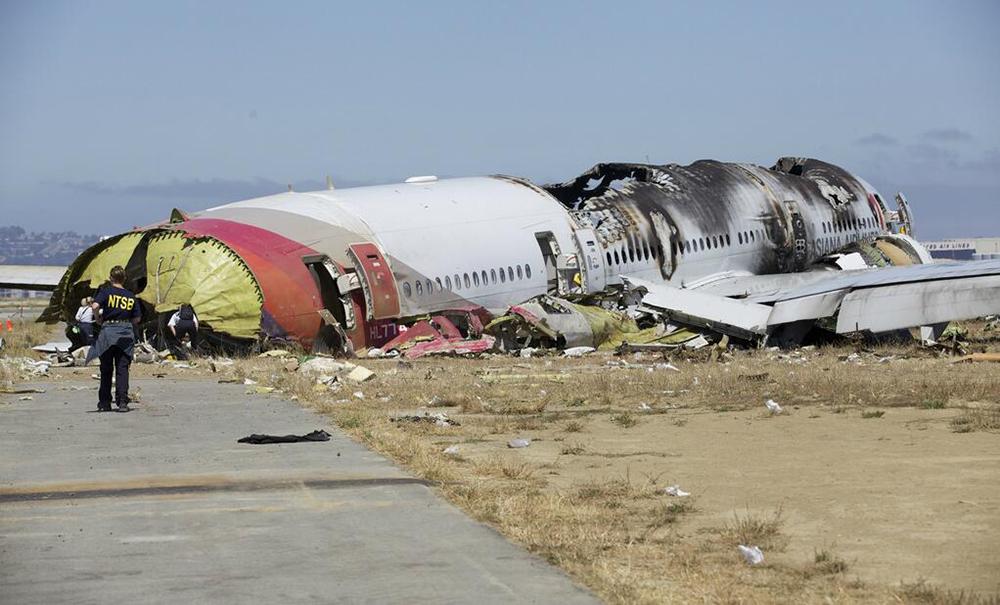
The fateful flight into San Francisco International Airport last July where the Boeing 777 flew in at 30 knots below normal approach speed and a dangerously nose-high attitude has been investigated by the NTSB and has released details of a hearing held Wednesday December 11.
The NTSB has just released new footage of the Asiana crash. The captain of the Boeing 777 who piloted the fateful flight was flying manually. At one point on the approach, the speed of the jet dropped substantially, and the jet hit the seawall at an airspeed that was 34 knots to slow.
The NTSB’s investigation has uncovered that the captain of the jet was concerned and stressed out by the visual approach. The approach was made with aid of the PAPI lights but without the vertical assistance that would have been provided by the ILS (Instrument Landing System). The captiain proclaimed that it was very difficult to make the approach in such a heavy airplane. According to the Asiana air operations safety divisions director, the captain, an employee of the airline for eight years, Lee Kang Kuk, was an experienced pilot with no record or poor performance or disciplinary actions. The landing should have been no problem for him.
The fact that this landing caused such considerable stress is disconcerting, and many are wondering and asking the question which is so de rigueur these days – is there an over reliance on automation?
The NTSB has released new surveillance video of the crash.
Flying out CYBW, Springbank airport which is number 6 for aircraft movements in Canada. We live near the rocky mountains of Alberta and are obsessed with mountains and aviation!
>>Read More >> Contact me







 . Most of my pilot friends have a copy. Other favourites include
  . The show MayDay is one of my favourites however only the older shows are available on DVD.