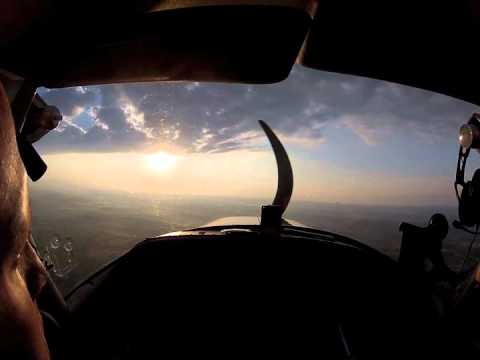
This video is obviously sped up, but it’s absolutely gorgeous. See the approach to Runway 11 at the Milford Sound airport, MFN, in New Zealand. It is in the fjords of New Zealand, called the Fiordland region, and is used mainly for flightseeing and tourist operators.
Runways 11/29 are 2565 feet long and the elevation of the airport is only 3 meters, or 10 feet above sea level. MFN is a small but very busy airport. This is not the first time a video of an approach and landing in New Zealand is featured in an amazing video – check out the amazing instrument flight into Queensland, also New Zealand. It’s equally stunning!
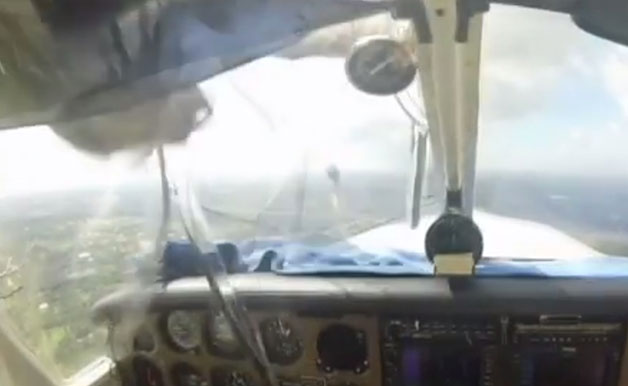
Bird strike – a large bird crashes through airplane windshield, and it was all covered on the pilot’s GoPro camera. This was a scary moment for Florida pilot Rob Weber, who suffered a minor cut to his forehead in this incident. The event happened in Florida.
This amazing video was recorded by the pilot with his GoPro camera. When he went out flying that day he never thought the day would end like this. This lucky pilot, Rob, would escape with his life and his airplane largely intact. Rob was on a solo flight on his way to Page Field, Florida, and he landed without incident despite having a large cut on his forehead from the glass shards of the windscreen.
It is not known what type of bird hit the plane, no ‘bird parts’ were left other than a severed foot and some feathers. Pretty cryptic! These parts will be used to identify the bird. The flight was over Fort Myers, Florida, in a Piper Saratoga and the bird hit the window at only 1000′ AGL. Did you know that generally we can expect to encounter birds up to 3000′ AGL?
Here is what his airplane looked after the collision. It will need a new windscreen, but otherwise there is not too much damage.
The plane post-collision. Image courtesy of dailymail.co.uk
What do you think of this incident? Leave your comments below.
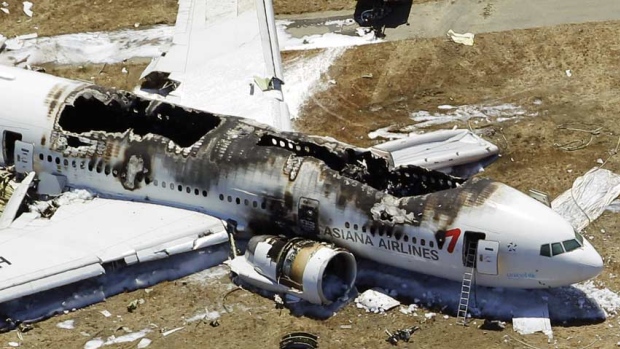
The crash of Asiana Airlines made headlines after the 777 jet clipped the seawall at San Francisco airport last summer. The latest update to the story is a ruling that Asiana Airlines has been fined $500,000 for breaking US law. The fine is in response to the airlines failure to promptly contact family members about the status of their loved ones. Allegedly the airline took up to 5 days to contact some family members. This crash killed 3 teenagers.
This is the first time the US Department of Transportation has fined an airline for failing to provide prompt and generous service to families of victims.
The airline will have to pay $400,000 and get a credit of $100,000 if it choses to provide educational seminars to their employees of what can be learned in wake of the crash.
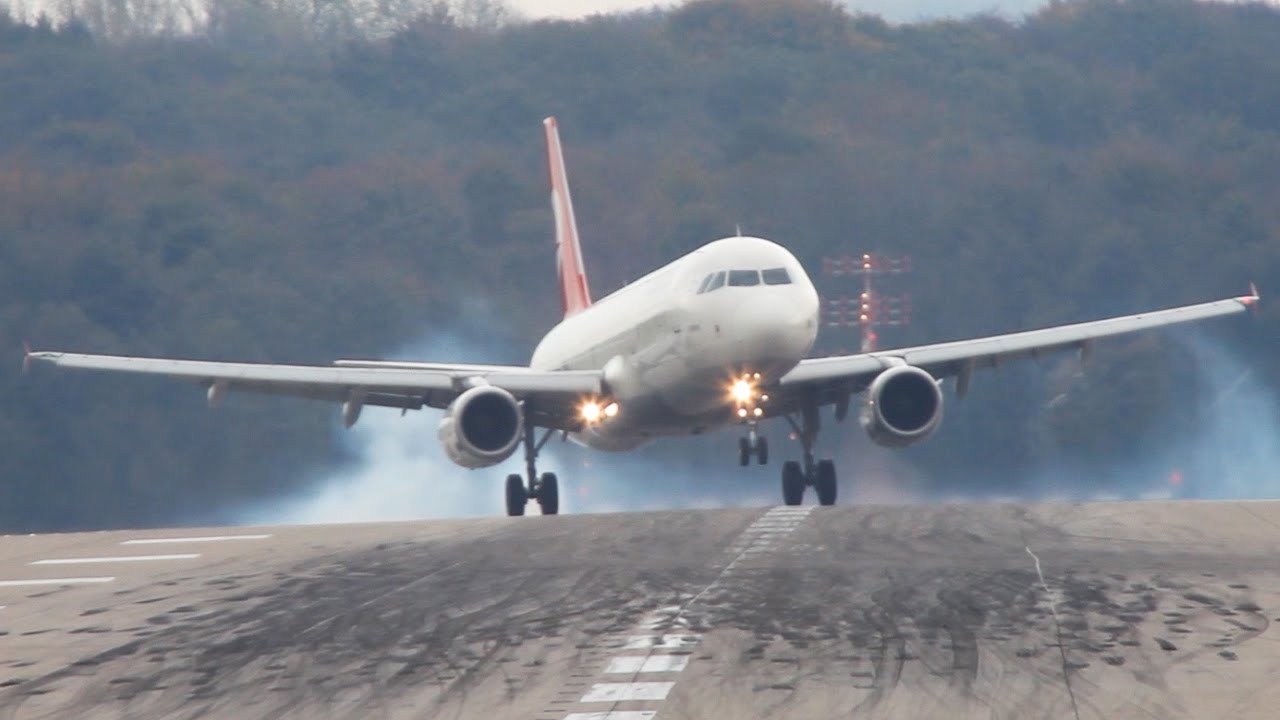
Watch this amazing video of a very strong crosswind approach and landing at Birmingham airport (BHX) in England (ICAO: EGBB). The Boeing 767 aircraft experienced severe turbulence on approach and the cross winds were reported at 35 knots. The runways at BHX are 15 and 33, so there was no way to avoid a crosswind in this case. The strong wind was reported perpendicular to the runway and you can see it in the pilot’s aggressive crab approach.
See as this 120 ton Boeing 767 bounces along the runway and how hard it’s right landing gear hits the asphalt. It looks like it didn’t even blow a tire, which seems amazing considering how severe the landing appears. See how the wings flex in this landing too.
These big airplanes make these types of landings routinely every day. But that doesn’t make them any less amazing!
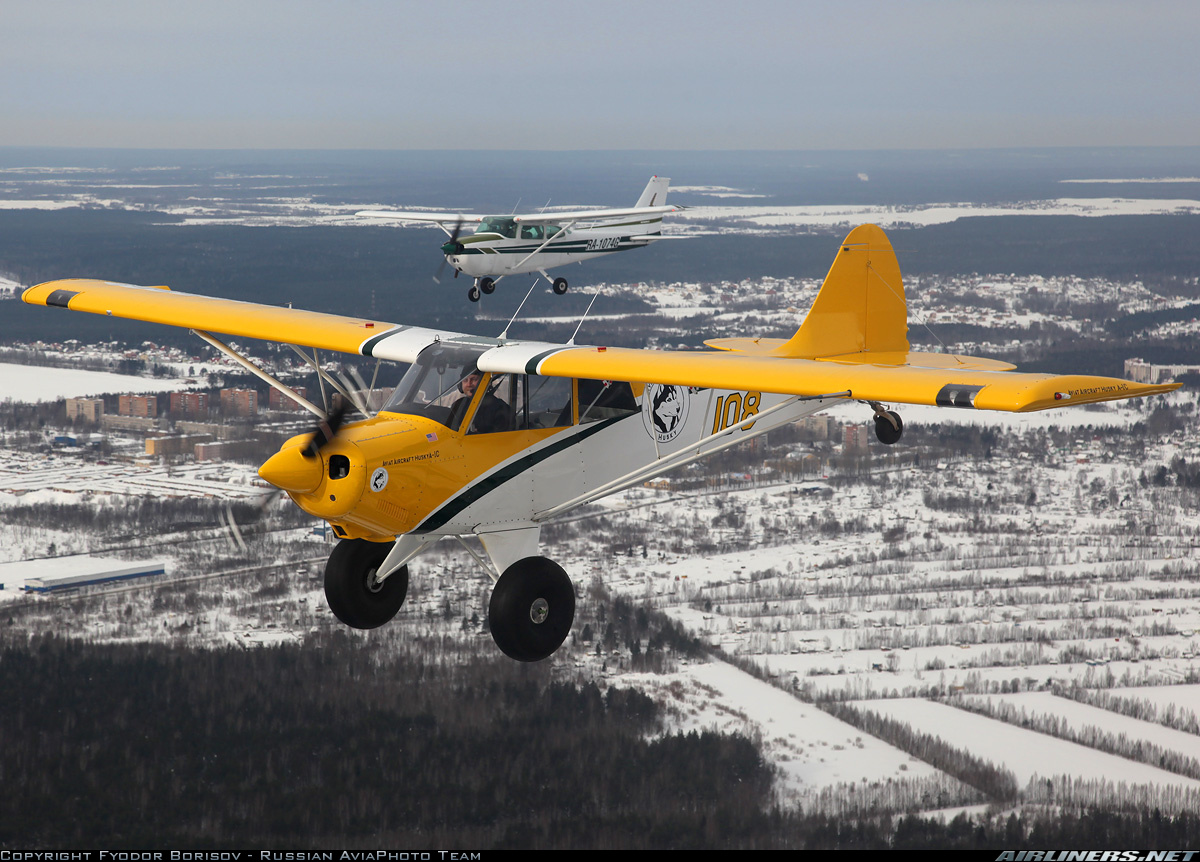
Have you ever seen a shorter ground roll than the one in this video? No doubt the pilot is experiencing heavy winds, you can see it in his approach that the winds are quite gusty causing one of his wings to drop.
This type of plane is a very popular backcountry plane with great short field and soft field operations capabilities. Check out how little runway the pilot uses in this video, which looks like no more than 100 feet.
It’s likely so windy, that he probably needs to keep the brakes on just to keep from lifting off straight from the ground. I’m not sure at the exact model of this Aviat Husky used in the video, but the Husky A-1C has a landing speed of approximately 50 knots.
Take-off distance with full flaps is about 200 feet, and landing distance is 350 feet. He is clearly using much less than that on takeoff and landing, and he isn’t using any flaps. So, it is obviously the wind that is helping him out with his short take-off and landing roll.
Throughout my training, I have done a lot of stalls, and eventually got the point where I was quite comfortable with them. Power off, power on, including the more advanced high power stalls. I was rather surprised when doing my full review of everything before my flight test, when my instructor asked me to demonstrate high power stalls I became rather nervous and was unable to perform one without throwing in the aileron on recovery.
I had let my training lapse and it had been quite awhile since I’ve done these more advanced stalls. A few power-off stalls allowed me to feel comfortable with them again but I continued to struggle with stalls using higher power settings, which cause sometimes a very pronounced wing drop due to asymmetric thrust, slipstream and other factors.
Why do we learn power-on stalls?
The power-on stall is basically a departure stall. We practice this stall to simulate a stall on departure, when we have a nose high attitude and high power settings (full power for take off). How could we stall on departure? If we fly into IMC on climb-out, hence loose the horizon and become disoriented, possibly succumb to an illusion that we are level and not nose-high enough (not reference or trust our instruments which tell us that we are in fact in a climb) and we pull back too much.
The airspeed bleeds off, and without knowing it we are nose high. As the aircraft reaches stall speed one of the wing drops off and when uncorrected, can enter a spin. At low altitudes, we have no time to recover. Before long we can be nose down in a spin with no altitude to spare.
Cessna 172 about to stall. Image from airfactsjournal.com
Stall/spin accidents
There are a number of these stall-spin accidents every year, and most of them occour at low altitudes. According to an AOPA study, from 1993 to 2001 stall-spin accidents accounted for 10% of all accidents and 13% of all fatal accidents for fixed wing aircraft weighing less than 12,500 pounds. An earlier study by the FAA Small Aircraft Directorate analyzed a sample of 1700 stall-spin accidents as far back as 1973 and found that 93% of them began at or below pattern altitude, which was 800 feet back in the 1970’s.
So the reason we learn a high power stall is to avoid a dreaded departure stall and to recover quickly, with minimal loss of altitude, and in coordinated flight (avoid a wing drop).
More rudder coordination is required
The reason why a power-on stall can be more challenging and more scary, is because it will require more use of rudder than a power-off stall. We must remember not to use aileron, ONLY rudder, because not is only aileron ineffective in a stall – the wing is stalled – it can also exacerbate or aggravate the wing drop in a stall, making it even more banked.
Anticipate a wing drop
Generally with a power-on stall, we will get a wing drop. Because of asymmetric thrust and slipstream, we generally see the left wing drop. Recall the left turning tendency of the aircraft at high power settings, for example while on the takeoff roll. On the takeoff roll with full power we always apply plenty of right rudder to keep the aircraft on centreline.
However we will not always get a left wing drop, it can, in fact be the right wing that drops, requiring the use of left rudder instead of right to correct. There are many reasons for this: one wing could have more fuel than the other and be heavier, it can also vary with the prevailing winds. So it is important not to anticipate one wing dropping but to watch which one does and react appropriately.
So one wing drops, so there is a tendency for us to use aileron to correct. This is very natural. In a stall, we have to fight the urge to use aileron and instead, “step on the rising wing.” (thanks to my instructor Steve for the tip – it works!) This means to use rudder instead of aileron, in the same direction if the rising wing:
Left wing drops (right wing rises): instinct will tell you to use right aileron – use right rudder instead
Right wing drops (left wing rises): instinct will tell you to use left aileron – use left rudder instead.
Check out this video as a power on stall develops into a spin. Looks like the student puts it into a spin (on purpose, note how he uses aileron) and the person in the right seat, likely the instructor, recovers.
How can I become more comfortable with these types of stalls?
In a word, practice will make them easier, as you do them over and over again and you are able to control them, you will regain confidence. Another great tip is to visualize the manoeuvre and talk yourself through it, when you are not flying. I used visualization and imagined one of the wings dropping, and what I would do. Eventually lost my fear as I learned I could control the airplane with rudder. It is important to use rudder opposite to the turn to correct the wing dip as fast as possible, and to leave the aileron in neutral position.
Like anything with flying, repetition will help you learn and feel more comfortable over time. Practice means everything!
Flying out CYBW, Springbank airport which is number 6 for aircraft movements in Canada. We live near the rocky mountains of Alberta and are obsessed with mountains and aviation!
>>Read More >> Contact me