Posted on

Decision making and turbulence

Pulling the pin!

I went out to the Cremona area this morning, intending to practice precautionary and forced approaches. Last time I went to practice them, it was not only busy in the practice area but there was also a small forest fire in the quadrant in which I was established, and couldn’t descend low enough to practice the procedures. As soon as I got close to 5000 feet the smoke smell became quite intense.  Since the ground in the area is around 4300′, I wanted to descend to 4800′ (I can only descend to 500′ feet above ground when flying by myself) to practice. But as soon as I hit 5000 it was already too much. That coupled with heavy traffic and a Bell helicopter that was returning flying at an altitude similar to the one I was using kept me busy. Eventually, I ran out of time and had to head back, and though I did one of each precautionary and forced, they weren’t quite that good.

Forest Fire near Cremona

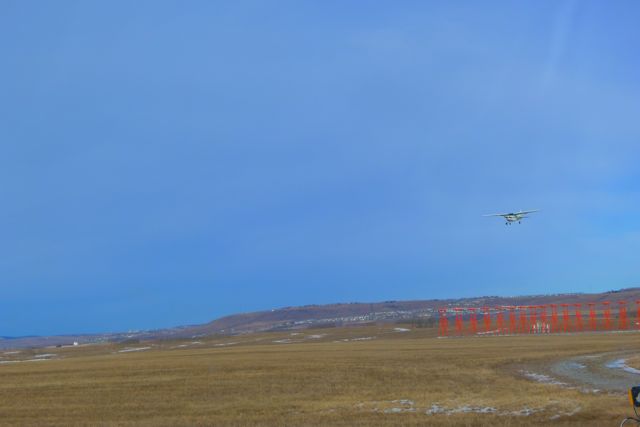
So this morning I went to try again. So everything went great this morning and the forecast was good.  The airport was extremely busy at 10 am: the circuit was full of planes and there was a backlog of planes in the run-up bay, and the poor controller was asking planes that have lined up at the hold short line “okay, who is next?”  and lined up another plane behind me to try and get as many off the ground as possible.  He received his take-off clearance when I was airborne, and at 800′ feet above ground, I turned around and could see him behind me. Expeditious!

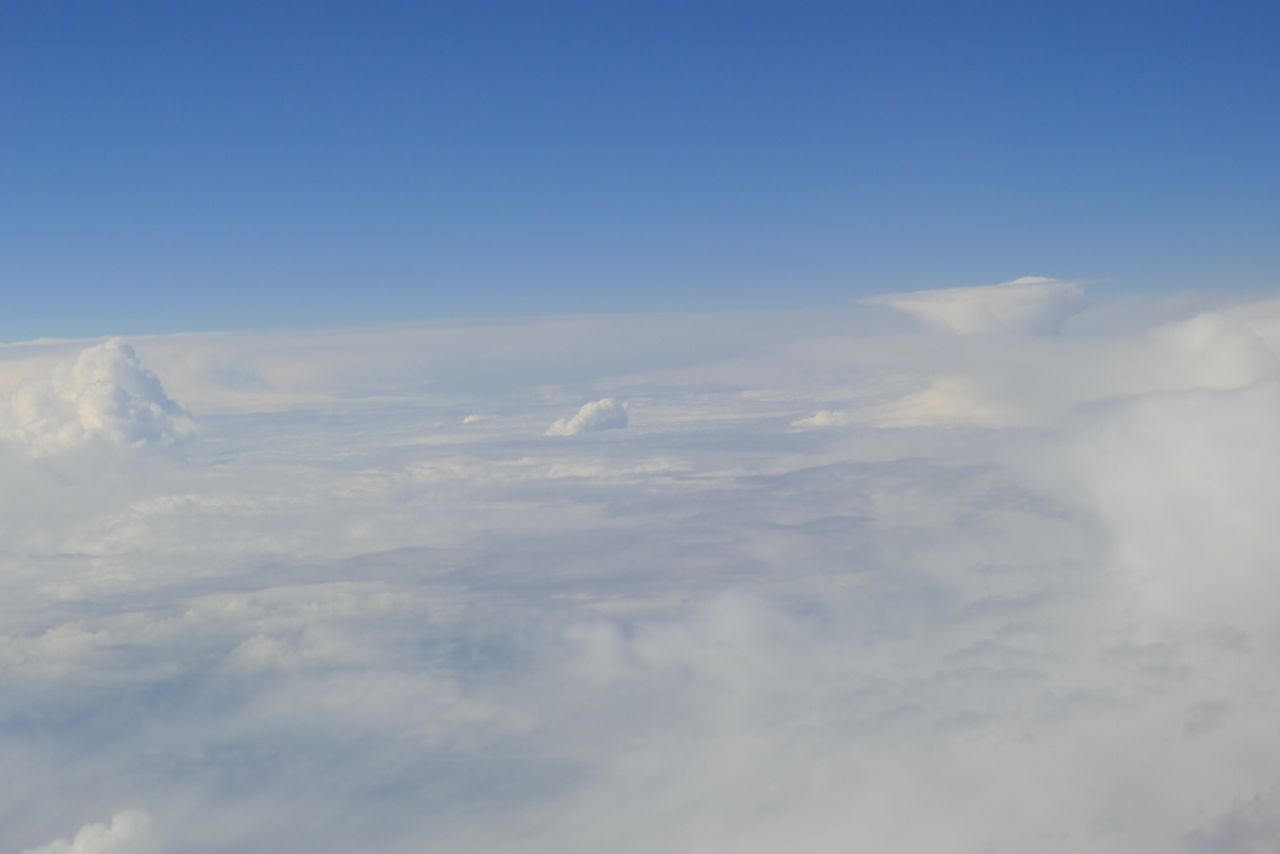
Once I was handed off to outer tower at Springbank I got a report that a pilot in a 172 had experienced severe turbulence between 6000 and 6500, 10 NM north of Cochrane above highway 22, exactly where I was flying.  I thought for a second and decided to keep going, feeling slightly disturbed.

Once I got handed off to Calgary Terminal I received another such report and warning.  I thought about it quickly “this might really suck if I go in there” …  I mean, moderate, okay, pretty bad since you have changes in attitude and altitude, but you can still control the plane positively at all times. Severe causes large, abrupt changes in altitude and attitude and large fluctuations in indicated airspeed, and the aircraft is momentarily impossible to control. Is it worth the risk?

I decided no, it’s not. I don’t know who is making the report and what their perception of severe turbulence is, so it could be someone over-reacting. But I didn’t think it was worth chancing it, and asked Terminal if I could turn around.  I was disappointed I couldn’t get out and do my procedure, but I would rather feel that than complete terror at being stuck in a small aircraft in those conditions.  This information was very good to know and I am thankful the controllers passed it on!

Here are what the different categories of turbulence are and how they affect your aircraft:

Turbulence Aircraft Reaction
Light Turbulence that momentarily causes slight, erratic changes in altitude and/or attitude.
Moderate Turbulence that causes changes in altitude and/or attitude, but with the aircraft remaining in positive control at all times. It usually causes variations in indicated airspeed.
Severe Turbulence that causes large, abrupt changes in altitude and/or attitude. It usually causes large variations in indicated airspeed. Aircraft may be momentarily out of control
Extreme Turbulence in which the aircraft is violently tossed about and is practically impossible to control. It may cause structural damage.

Ultimately, you are the pilot in command when flying solo and you have the authority to make these decisions, judgement calls, using your experience, skill and as well your risk tolerance. I am pretty conservative and would not put myself in that situation at this point.

When I landed and after I arrived back home I checked the PIREPs again, and sure enough, there was yet another report, this one at a lower altitude and even closer to Springbank.  And there you go there was something to it, and I think I did the right thing. Posted here. Can you decode it?

CYBW 330015 /TM 2047 /FL055 /TP RV7 /TB MDT-SEV 055-070 /RM TURB APRX 5 NM TO 15 NM NW CYBW
Posted on

Precautionary Landings

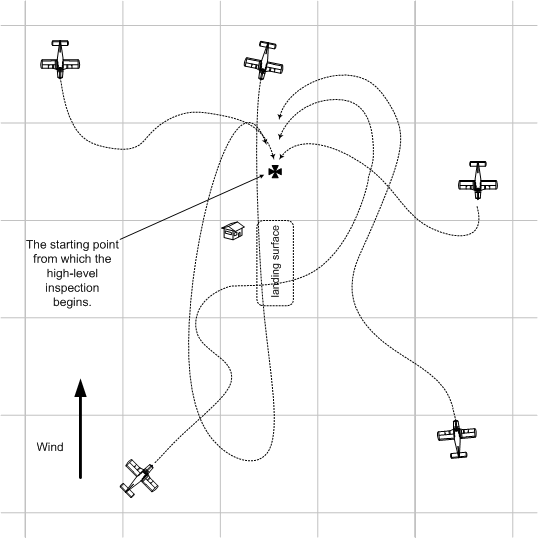
Starting Point for Precautionary Landing. Image Courtesy of Langley Flying School.

Preparing for a precautionary landing

My next series of flights gets me out of the circuit and back into the practice area where I am learning how to do a precautionary landing.

Why do we need to learn this?

There are a number of reasons.  You may have a sick passenger on board, the weather may be a cause of concern.   There may be something that you are concerned with, such as an engine that is acting up, you may be getting low on fuel and think you may not make it much further. In any case, the landing is done to avoid a potentially worsening situation and is done so while engine power is available.  The sooner the landing area is selected the better once a precautionary landing has been decided.  Quite simply, a precautionary landing is completed in two basic steps:

1)  A low pass flown like a circuit over the potential landing area, this is done to inspect the surface for suitability, and

2) A normal circuit flown to end in a safe landing.

There are two basic procedures, one for a controlled airport and one for an uncontrolled airport. In the case where a field is selected, this is obviously uncontrolled.  This is what I have been practicing on.  When we arrive at the practice area, which is the Cremona area just north of Springbank,  we broadcast our intentions for the exercise then proceed to look for a field we can “land” on.

Starting Point for Precautionary Landing. Image Courtesy of Langley Flying School.

We find a field and enter a normal circuit approach. The goal is to make two passes: a high pass and a low pass to judge the suitability of the field for landing.

In an uncontrolled field, such as a farmer’s field, we make a high pass at 1000′ AGL and in a controlled field like an aerodrome we do this at 1500′.   Our high pass is done at cruise settings, 90 knots in the 172.  We fly the normal circuit at 1000′ and then overshoot.

Then we do the “3 Ps“:

(1) Pan Pan call: alert traffic in the area that we are preparing for a precautionary landing.  We say “Pan Pan” three times and say our aircraft identifier (for example, FIAH, GSKF, and so on) three times.

(2) Passenger brief. Let your passengers know what you will be doing, to stay calm, to put their hands free of the controls, and to move their seat back (if sitting in the front).  Then:

(3) We do our Pre-landing checks.

Then we do the low pass. This is done 500′ AGL or whatever altitude is best for inspecting the landing area. In the 172, we fly at 60 knots with 20 degree flap.   The slower speed will allow for better inspection of the field, and the flaps will allow for better forward visibility. The speed is also not too slow – that is it’s not in the slow flight range – which will allow the pilot to focus on observing the field rather than maneuvering the airplane. We also want to prevent getting close to a stall.

Precautionary Landing Procedure. Image Courtesy of mpaviation.com

On our observation of the field, we want to do our “COWLS” check, for suitability in landing:

C = Civilization: are there homes, buildings, or people nearby?

O = Obstacles: are there any obstacles that need to be cleared, such as powerlines, or trees?

W = Wind: always try to land into the wind if possible. Look for indicators on the ground: direction of smoke, direction of long grass, trees, etc.  Is smoke trailing upwards (calm winds), being blown slightly (gentle winds) or rapidly breaking off (strong winds)?

L = Length: once we are abeam the threshold, we count how many seconds it takes us to fly the length of the field. This is why we use 60 knots at 20 degree flap in the 172: if we count the seconds it takes to fly that length, we can estimate the approximate length of the field.

On the low pass, 500′ AGL, abeam the threshold, we start the timer. If it’s 20 seconds, the length is 2000′, (20 * 100); if it takes 33 seconds, the length is 3300′, (33 * 100)  and so on.

S = Surface: Check the suitability of the surface for landing. For example, are there ruts in the ground, or is the surface smooth? Is the surface grass or dirt?

Once our high and low passes are completed, we establish for a normal approach with full flaps.

Next read about the forced approach and see where it actually happened in real life!

Posted on

The overshoot procedure

Sometimes an overshoot is necessary. When an approach is not going well, or there is an unexpected obstacle on the runway, an overshoot should be considered. Often the pilot doesn’t have much time to make this decision so the procedure to overshoot should be practiced diligently, so the response is swift and automatic.

An overshoot may be necessary for many reasons. For example, if wake turbulence is suspected, crosswinds or tailwinds are too great, when there is an obstacle on the runway, or if the pilot feels they won’t have enough runway to land. 

An unplanned “obstacle” can be the presence of wildlife, for example. This has happened to me several times at CYBW. Once, on approach, a coyote was standing right in my intended touchdown spot. Without hesitation, we added power, carb cold and took off. 

In the Cessna 172:

Zero Flaps:

1) Full Power,

2) Carb Heat Cold.

Full flaps:

1) Full Power,

2) Carb Heat Cold,

3) Flaps 20 degrees – immediately.

Posted on

Airport weather minimums

Since the weather has been so bad for the month of October in the Calgary area, we have been seeing a lot of IFR weather – weather that I, as a private pilot can’t go flying in.  What defines IFR conditions?  I thought it would be useful to post the IFR outlook chart as published by The Aeronautical Information Manual (AIM).

This table shows the airport weather minimums required for operation – takeoff and landing.

There is also SVFR – special VFR that the VFR pilot can request when minimums are not met. SVFR requires that the pilot has at least 1 mile visibility, stays clear of cloud and the aerodrome has 1 mile horizontal visibility.

Category Ceiling Visibility
IFR Less than 1000 feet AGL and/or less than 3 SM
MVFR between 1000 feet and 3000 feet AGL and/or between 3 and 5 SM
VFR more than 3000 feet AGL and more than 5 SM
Posted on

How to choose the right flight school

After I have selected which aircraft I wanted to train on, it was time to chose the flight school that best suited my needs.

Cost of school

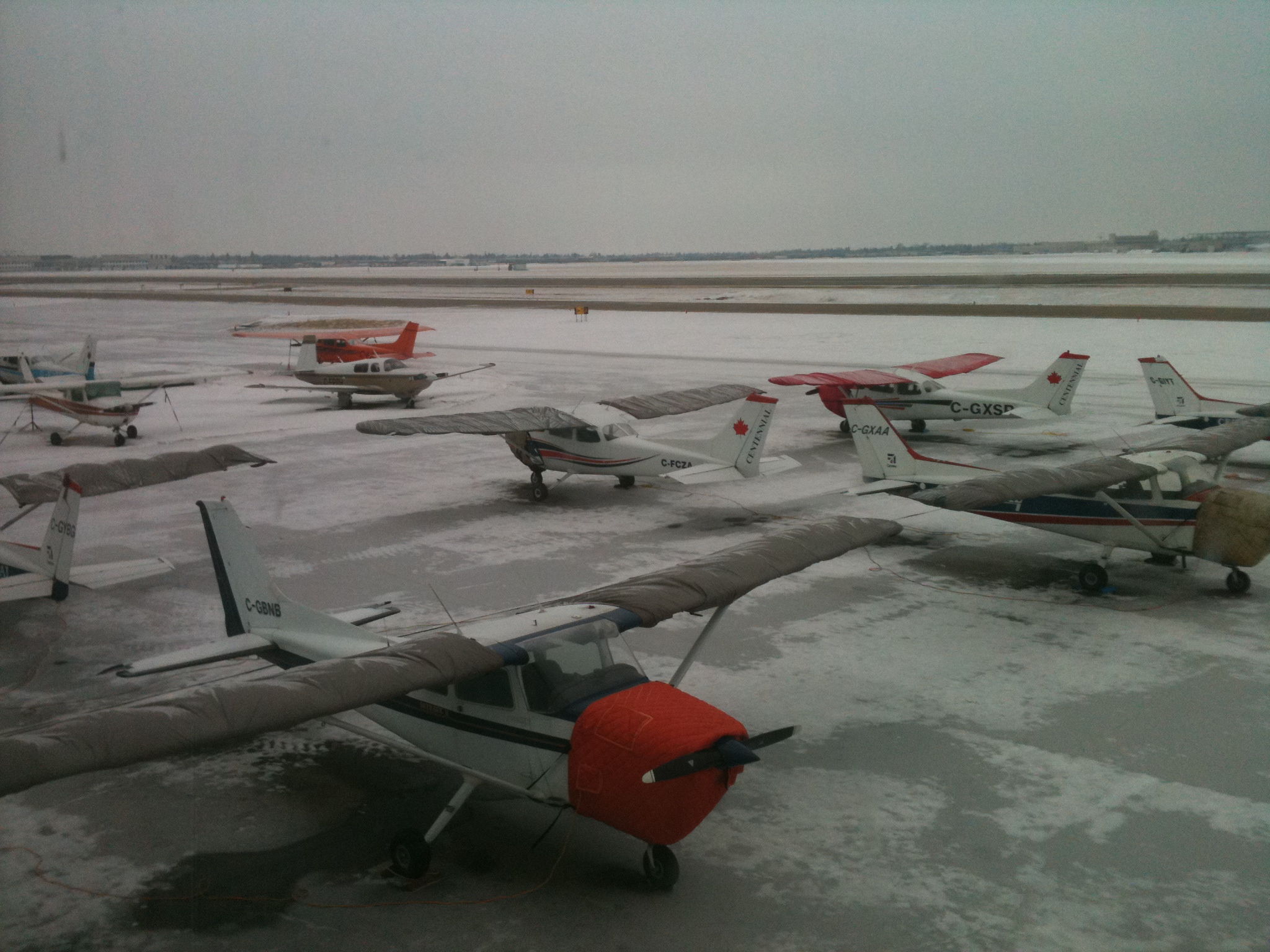
When I lived in Edmonton I had the choice of a few different airports, but the City Centre Airport, right downtown, was impossible to beat in terms of location.  There were two flight schools there – Centennial and the Edmonton Flying Club.  The Edmonton Flying Club (EFC) they has an annual fee for being part of the club and learning to fly there.  I wasn’t sure how long I would be staying in Edmonton, so, I choose Centennial because they were slightly less expensive due to the absence of annual fee. They had several 172 which were well maintained, and I found the staff and instructors to be very professional.

Quality of Instructors, Planes and Facilities

I found the instructors at Centennial school impressive, and their planes were well maintained.   Much of the lower costs came from the fact that they did not own their own hangar (something that the EFC had). Hence, these cost savings were built into the rental prices.

Not having a hangar does make a difference when you’re learning to fly in a northerly, cold climate. I remember winter mornings when it was still pitch black at 8 am doing my walk around, peeling back the wing and cowling covers, while the bitter -25 degree C winter wind whistled past!  So, there is definitely a trade-off.

Make a trip to the school and meet some of the flight instructors. Do you like any of them? How about the culture of the school – is it rambunctious and unprofessional or is it quiet and friendly?  You don’t have to choose your instructor right away but you should definitely observe how the instructors interact.

So I finally settled on Centennial and my ground instruction began.  I enjoyed the theory part of it – what I like about flying is that it is so multi-faceted, there are so many knowledge areas:

  • weather
  • aerodynamics
  • aero engines
  • instruments
  • navigation

When you’re learning to drive, you don’t have to know the details about the engine you are operating (unless of course, you’re a commercial driver driving a transport truck). But in aviation, everything is tied together so intimately.  I found it fascinating.  Since I’m a climber and backcountry skiier, I already have an intimate relationship with and understanding of weather, since weather affects mountain sports very directly, but now I was entering a field where weather is even more important.  Aviation is very weather dependent, and understanding weather is key to being a good pilot.

Choose an instructor you like

The next thing you want to focus on is your instructor. Choose carefully and don’t be afraid to go up with several different instructors until you find one that suits you best.  Sometimes you will be lucky to find the first person you choose will be a great instructor for you, and it is definitely true that if you like talking to them on the ground, you’ll like them in the air, too.  You must really like your instructor – it is the most important choice you will make in your flight training.

Some instructors are just out to get their hours and move on to an airline job, others really love teaching. Remember, you are the paying customer and are paying big bucks, for your training and money talks.  So be selective and stick with someone who meets your needs. Switching instructors, especially early on in your training is time consuming and expensive. I switched instructors right as I was permitted to go up solo and it took my new instructor 10 hours of training before he trusted me enough to fly solo.

I met my instructor in ground school

My first instructor taught the evening ground school, and I immediately liked her teaching style and personality.  After a few classes asked her if she would take me up as a student. After many cancellations due to weather – it was springtime, after all, and the systems were shifting – we finally got up for the first time together.

Update on flight training in Edmonton

If you live in or around Edmonton, I’m sure you have heard about the closing of Edmonton City Centre Airport (CYXD).  My old school, Centennial, is now located at the Edmonton/Villenueve airport (CYZL) and Edmonton Flying Club is now at the Parkland Airport, CPL6. The other nearby airport is Cooking Lake, CEZ3.   Cooking Lake Aviation operates out of that airport.

Your feedback is greatly appreciated

Do you have comments or questions? Please leave them below

Did you find this information useful or entertaining?  Please share or “like” this post.

Posted on

How to choose your training aircraft

Selecting your Training Aircraft

After my discovery flight (fam flight) in a Diamond Eclipse which was so light and maneuverable and fun to fly I researched aircraft rental rates. Renting the diamond at the Edmonton Flying Club at the time was more expensive than what they charged for the C172, and their rates for the 172 were slightly more than what Centennial Flight Centre charged.

I checked the more recent rental rates at the EFC and the Diamond is offered at a rate of $150 per hour and is a little bit less than the Cessna C172 which runs $154 per hour. The EFC is also a not for profit flight club owned by it’s community – the people that train there and rent there.  So by flying with them you would be part of the community and have to pay annual rental dues. Though that may be unattractive to have additional costs, it’s actually a great way of meeting people since these clubs tend to organize lots of social events. In addition, all the profits are put back into the club meaning there may be nicer facilities, and the aircraft may benefit too from better maintenance.

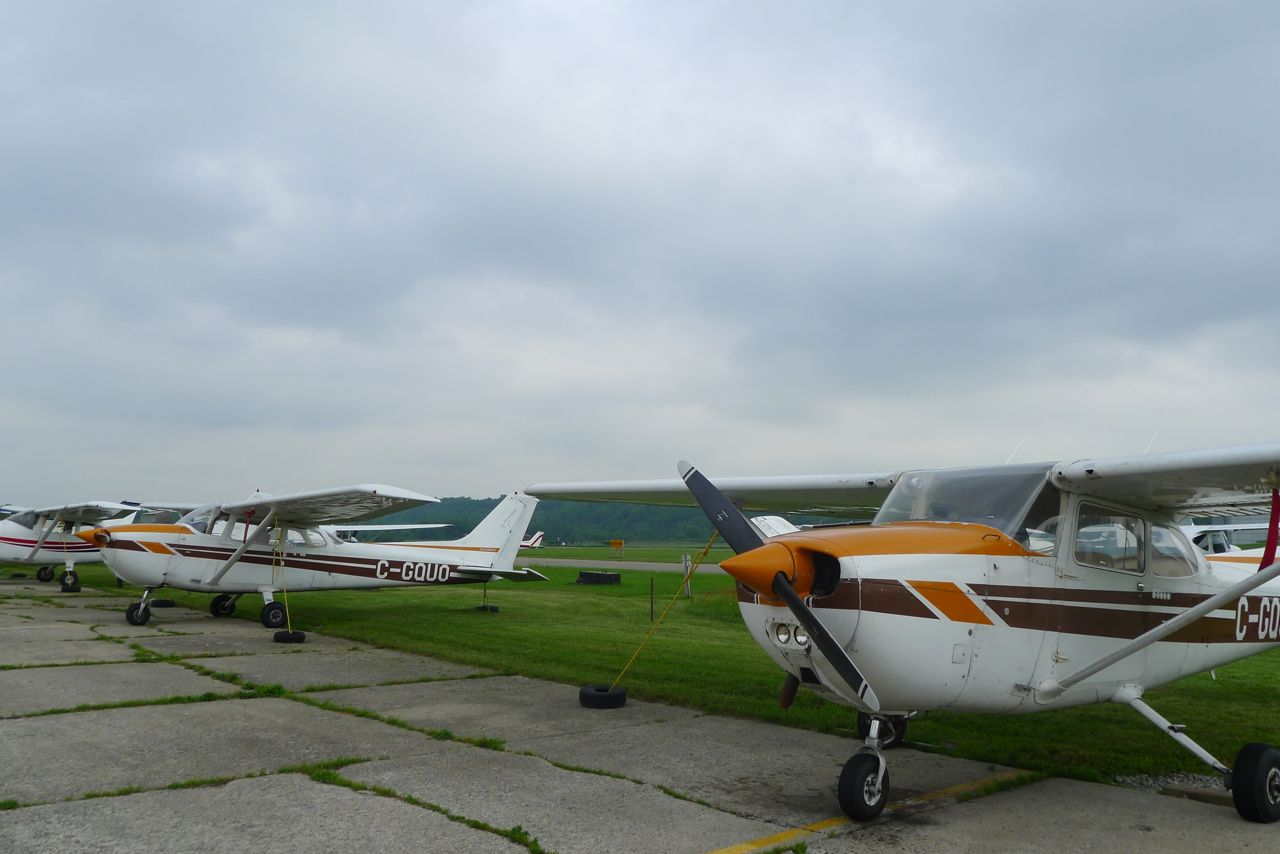
cessna c172 training aircraft
One of the Cessna c172 aircrafts I train on

Centennial’s rates were $129 per hour for the 172.  Though cost shouldn’t be your number one consideration, it is an important factor.  Both schools also offered the two-seater Cessna 150 for $130 and $114 at EFC and Centennial respectively.

I was fairly sure that I didn’t want to learn on a 2-seater plane, because once I got my license I wanted to go on extended trips with friends and with lots of luggage (since I need a lot of gear for my outdoor pursuits). So, I ruled out the Diamond because I needed room for people and cargo.

As well, I realized I wanted to learn on a less maneuverable high-wing aircraft, a popular aircraft that was widely available for rent everywhere and the Cessna C172 is widely available at most flight schools. It is the most popular training aircraft.

Now that I had my training aircraft selected it was time to chose the best flight school  at the Edmonton City Center Airport.


Your feedback is greatly appreciated

Do you have comments or questions? Please leave them below

Did you find this information useful or entertaining?  Please share or “like” this post.