We all learn the very important procedure of forced approach. One of the most important parts of the procedure is choosing the field.
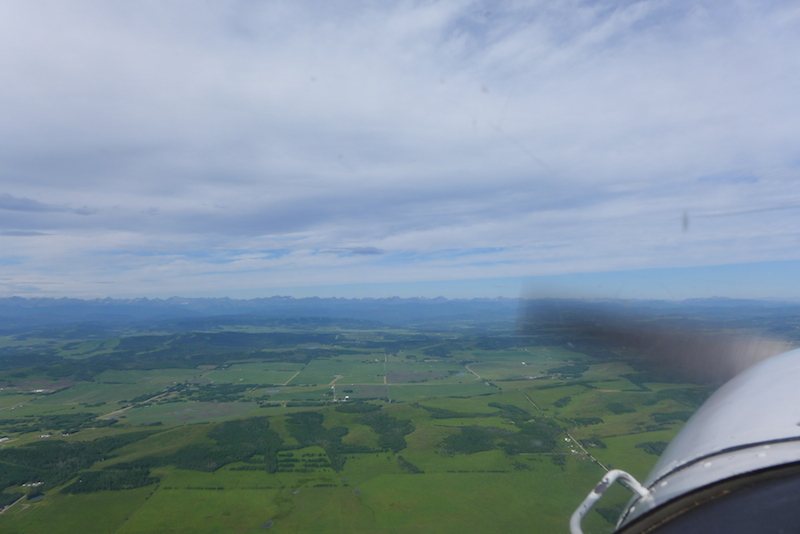
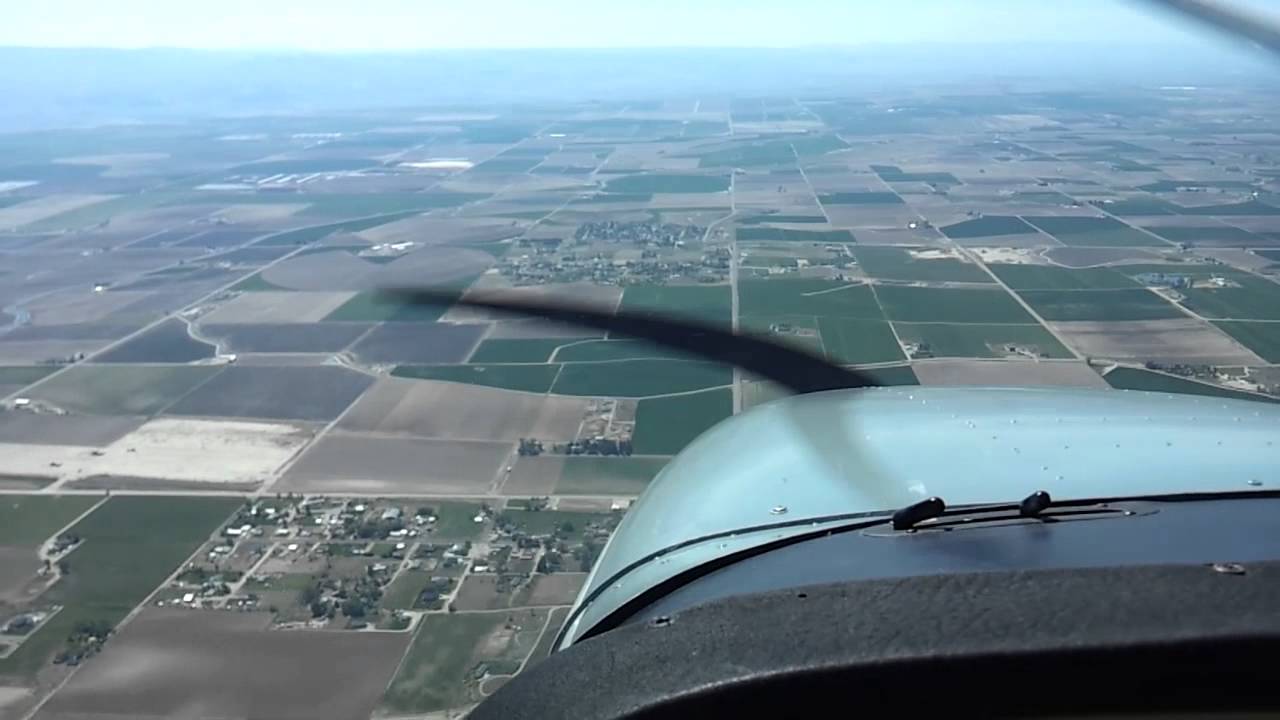
The video below shows that generally, there are three kinds of fields that you will have to choose from: dark brown, light brown and green. Do you know the characteristics of each that makes them a suitable or unsuitable landing spot?
For example, did you know that a green field with cattle grazing will mean that the surface will generally be smoother than if there was no cattle? Obviously the cattle will present an obstacle to be avoided, but an area on the same field with no cattle will likely be a good landing surface.
A dark brown field will often mean that the surface is usually freshly plowed, and will to too soft for landing, often causing your aircraft to flip. Your best bet is often a light brown field. Oh, and how about roads and dealing with obstacles such as power lines?
Once we have selected a field we must find a way of getting down to the ground. One of the most popular methods we are taught is the low key / high key procedure, though there are other methods.
The Smart Pilot website features many aviation safety related videos and are well worth a watch! We are happy to post their videos here too, so keep checking back for more.
We just found out about this new documentary and wanted to share the trailer. It is about how the airplane has changed the world and how we move around in it. Many take aviation for granted, how you thought about how amazing it is that we can be on the other side of the world in less than half a day?
It was filmed in 18 countries across all 7 continents. This latest aviation movie is scheduled for release in 2015. It was written by Brian J. Terwilliger and narrated by Harrison Ford.
Some of you may know that Harrison Ford is a pilot, too. He has a license to fly fixed wing aircraft and helicopters.
We’ll definitely be watching for this movie in 2015!
A few months ago a Cessna 172 experienced engine problems and was forced to make an emergency landing on a Quebec highway.
The footage is from an onboard camera that films the entire landing. The pilots did a great job and no one was hurt in the incident. The plane touched down on highway 10.
The pilots immediately establish a glide an execute successful forced approach, in traffic.
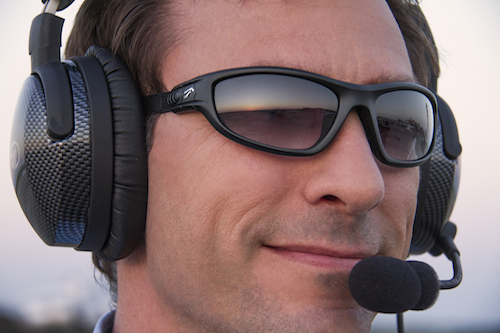
Flying Eyes sunglasses were created by a pilot for pilots. The founder of Flying Eyes, Dean Siracusa, has been flying for the past 14 years, and was unable to find a set of sunglasses that fits comfortably beneath his headset. He found many other pilots have had the same problem, and the idea for Flying Eyes was born.
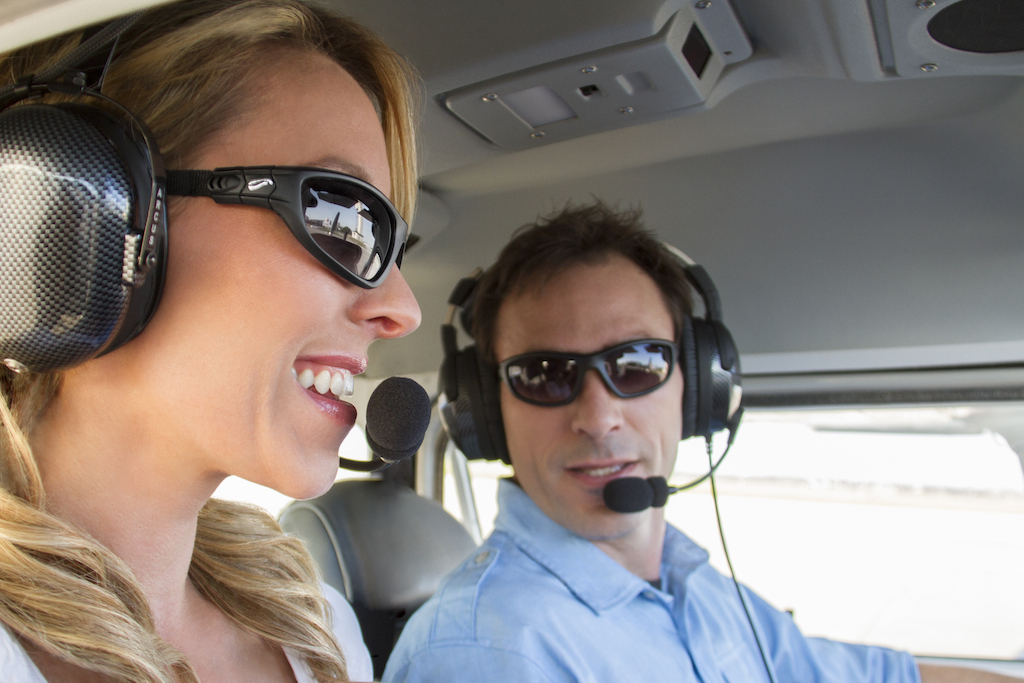
Created for wearing under an aviation headset
If you are a pilot, you know that it can be challenging finding a set of sunglasses that fit beneath your headset. Many squeeze your head very tightly, making wearing them under a headset or a helmet is very uncomfortable. On top of it, many sunglasses create a gap that leaks noise through the cups of your headset.
I love my current sunglasses, which are prescription Oakleys, but they are really uncomfortable under my headset: they squeeze my head and they create a gap in my ear cups that leaks noise.
The Hawk Convertible by Flying Eyes Optics
Practical and Durable
These are the ideal aviation sunglasses. The sunglasses are the perfect way to protect your eyes while looking great and are virtually unbreakable. Made from durable Resilamide, these glasses are very durable.
Convertible
These sunglasses are easily convertible and come with three different options. First, the non-elastic strap that singes behind your head is perfect for wearing with an aviation headset. It’s super comfortable and has a snug fit, and you can barely see the strap. The glasses also come with a ultra thin temples that are perfect to wear with a helmet – they are 70% thinner than regular temples but equally strong and resilient. Regular temples are perfect for everyday wear.
Flying Eyes come with three different temple options which are quick to swap.
It takes seconds to change the temple styles. Simply click the quick release top and bottom button on the temples and they will pop out. To insert the desired temples simply click them in, and you’re done.
The glasses have an excellent fit and are extremely comfortable to wear. The frames come in either a matte or glossy finish. The glossy black looks sleek and stylish, while the matte finish is a more low key finish.
Three different types
The sunglasses come in three different types: the Hawk, which start at $169 depending on the type of lens chosen. There are four types of lenses available, the standard solid neutral gray tint being the most popular for pilots. Also available are:
Polarized: not recommended for pilots as they interfere with the view of the instrument panel and other devices
Gradient Gray Tint: subtle and excellent for blocking out harsh sunlight through the windshield, allowing for easier viewing of the instrument panel
Transition photochromic lenses, which darken when you go outside and lighten inside, responding to UV rays
The sunglasses also provide UV 400 protection, on all lenses. This is a very high level of UVA and UVB ray protection, blocking all sunlight up to 400 nm in wavelength.
They also come with a prescription option (starting at $336) and as bifocals (starting at $189). To get the prescription version, you must send over an Rx from your optometrist and Flying Eyes will do all the work. Presciption range available is from +4.00 to -4.00.
No more IFR Hood
A neat feature of these glasses is they can easily be converted into ‘foggles’ – so you never need an IFR hood ever again. They are cleverly designed, static-cling labels you can adhere to your sunglasses that turn them instantly into IFR training glasses. These labels are custom designed for the Flying Eyes sunglasses and block out all extraneous viewing from your line of sight except for the instrument panel in your cockpit. These are available for $12.
Specs
Precision polycarbonate lenses
Lightweight Resilamide frames
3 convertible temple options included
Soft micro fiber bag and cleaning cloth included
Zippered protective hard case
Where to buy
Interested in learning more? These sunglasses are available online from the Flying Eyes online store.
Update!
There are even more sunglasses to choose from now at Flying Eyes.
Flying Eyes has been around for several years now and have expanded their product line up. Including the original Hawk convertible sunglasses which are available with or without prescription, which retail for $164- 194, there are also six other models, all made to fit under headsets or helmets. Check out their full product line! They even have classic aviators, the Cooper Titanium, with slim sides for wearing them under your headset.
Unlike classic aviators, which even though they have thin temples, can still hurt your head, the Flying Eyes Cooper titanium aviators feature micro thin temples, which fit under headsets without pressure or pain, no matter how long you wear them.
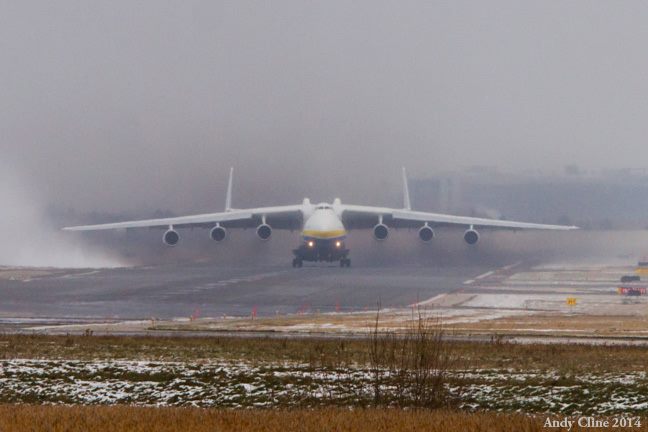
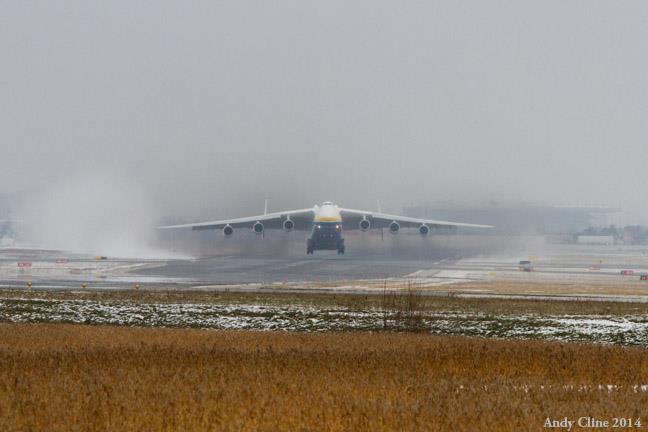
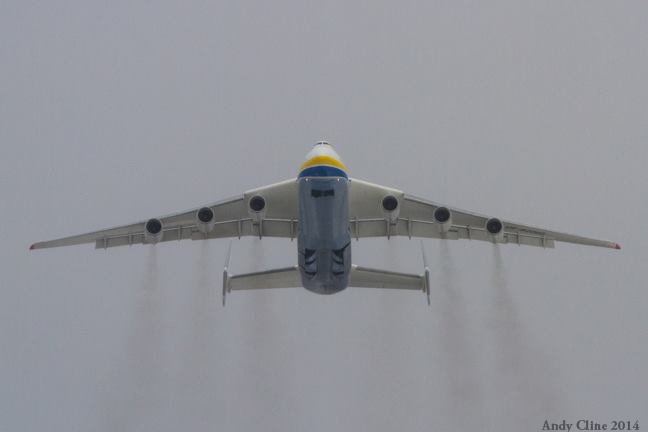
The largest aircraft in the world, the Ukrainian built Antonov 225, tail number ADB 3452, made it’s first ever appearance at Toronto Pearson International Airport on November 18, 2014. It was delivering mining parts from Doncaster, Sheffield, England (DSA/EGCN) via Keflavik, Iceland (KEF/BIKF) and Goose Bay (CYYR). It departed YYZ on November 19, 2014.
Images courtesy of Andy Cline.
Antonov 225 on takeoff
Seeing this aircraft is always a spectacle. Conceived in the chillest years of the Cold War, it was originally designed to transport space shuttles for the now defunct Soviet space shuttle program.
This airplane, currently the only one of it’s kind, is nicknamed Mriya, which means “dream” in Ukrainian.
The 225 makes a the jumbo jet 747 look small in comparison and can carry twice as much as a 747 freighter. It’s dimensions are impressive: it’s nearly a football field long from nose to tail (84 meters) and from wingtip to wingtip (88 meters).
It has a maximum takeoff weight of 1.32 million pounds – that’s 640 tonnes – and is equipped with six ZMKB Progress Lotarev D-18T turbo fan jet engines, each capable of 51,590 pounds of thrust.
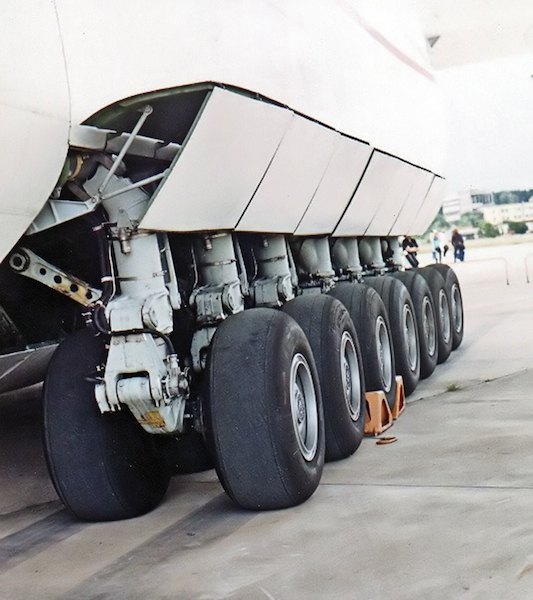
It requires six crew to fly the plane, and holds 300,000 kg of fuel and cruises at 800 km /h – that’s 432 knots! The service ceiling is 11,00 meters (36,000 feet). It’s landing gear system features 32 wheels, some of which are steerable.
The landing gear of the 225. Image from Wikipedia.
The plane requires a runway that is over 9800 feet (2.9 km) to land, and at maximum weight, that runway needs to be 11,000 feet (3.3 km).
There was only one of these aircraft ever built! Apparently, there is a second one that is being built, and is reportedly 60-70% complete.
It is amazing that an aircraft of this size can fly through the air. An amazing feat of engineering.
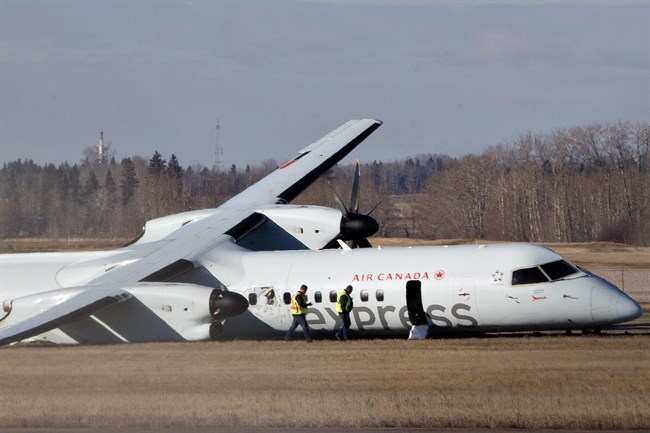
On November 6, 2014 on a routine flight from Calgary, Alberta (YYC) to Grande Prairie, Alberta (CYQU), a Air Canada owned Dash-8 blew a tire on takeoff from YYC.
Due to unfavourable landing conditions at YYC, presumably strong crosswinds, the pilots announced they would divert to Edmonton International and carry out an emergency landing.
Upon touchdown the right landing gear collapsed sending the propeller into the tarmac, destroying it, then the prop broke off and cut into the fuselage of the airplane and injuring a passenger that was seated in that row.
Four passengers were injured in the incident. Of the four passengers admitted to the hospital for treatment, one remains in medical care for observation.
The aircraft sustained serious damage. The De Havilland Canada Dash-8 aircraft registered C-GGBF, manufactured by Bombardier, first flew in 2013. Officials say the aircraft will likely return to service in a few months.
Image Courtesy of CTV News Edmonton
There were 71 passengers onboard the Air Canada Express flight.
Flying out CYBW, Springbank airport which is number 6 for aircraft movements in Canada. We live near the rocky mountains of Alberta and are obsessed with mountains and aviation!
>>Read More >> Contact me