Posted on

The dangers of flying through rotor wash

We all know wake turbulence can be very dangerous, and this video shows that helicopter rotor wash is no exception.

Wake turbulence is invisible, extremely powerful and can last for several minutes, making it important to take note where the turbulence likely is, and time until it’s likely dissipated, or plan to fly over it instead of through it.

In this video, a UH-60 Blackhawk helicopter takes off, and only 27 seconds later, a Cirrus SR-20 attempts to land. The airplane appears to fly into the area where rotor wash was produced with disastrous results.

This accident happened in Fort Collins, Colorado. It’s reported that the pilot was only on his second solo in the Cirrus, and attempted to land long after he saw the helicopter take off. The rotor wash the airplane flew into put the plane into a steep left bank which was impossible to recover from since it was only a few feet from the ground.   

How helicopters produce rotor wash

Helicopters produce rotor wash much in the same way that fixed wing aircraft produce wake turbulence. The lift produced by the rotors create vortices that swirl downward, bounce off the ground and go up again. If winds are light, as they were in this scenario, the turbulence will linger a lot longer. In this situation, the pilot of the Cirrus hits the turbulence 27 seconds after the helicopter took off.    

On takeoff, rotor wash is harder to manage. If the pilot was taking off, the pilot would have to plan to have taken off well beyond the point where rotor wash is suspected, and to have climbed enough to avoid it, much like an obstacle take off

How to avoid rotor wash

Again, these procedures are similar to avoiding wake turbulence. Stay above rotor wash, know the direction the wash will travel due to winds. Stay upwind of the wash and give it several minutes to fully dissipate. Stay above and land beyond where the turbulence is. In this situation, the pilot should have either have tried to land long or just execute a overshoot.

In a controlled airport, air traffic control will help you avoid the wash, but if you’re in an uncontrolled aerodrome, you’ll have to be extra vigilant. 

Posted on

Space Shuttle launch and landing

This amazing footage shows the launch of the last space shuttle, the Atlantis, the last space shuttle to fly and marks the completion of the Space Shuttle program. The shuttle was launched from the Kennedy Space Center in Florida on July 8 2011.  The space shuttle is now retired. Different vehicles are now used to access space, including the Russian capsule Soyuz and the Orion. More vehicles are being considered and being tested.

The footage of this space shuttle  is very cool and shows some key phases during a mission, the launch, docking, approach and landing. As an extra bonus, it’s set to some pretty cool music. Make sure you have the music up for this video.

Have you ever wondered how the space shuttle comes back to earth? After approaching through atmosphere, the shuttle was flown very much like an airplane, with some pretty major differences in scale. The shuttle, with a heavy, rectangular body, huge nose cone and shorty, stubby wings is not very aerodynamic and essentially drops like a brick on approach. It takes roughly 3 and a half minutes to descent from 37,000 feet at a descent rate of 10,000 feet per minute. 

A flying brick

A typical descent path for an airliner is 3 degrees, but the shuttle is so heavy and produces so much drag, they use a 20 degree glide slope flown at 345 miles per hour with a descent rate of 10,000 feet per minute. To give you the immense difference of scale, a typical airliner will use a descent rate of 750 feet per minute flown at about 165 miles per hour. 

The shuttle touches down at around 200 knots (225 miles per hour), faster than the flown speed on descent of an airliner. 

In fact, NASA astronauts train in a modified Gulfstream II jet which simulates how unaerodynamic the space shuttle actually is. It flies with it’s landing gear down and engines in reverse. 

The landing gear doesn’t even go down until 300 feet before touchdown! The pilots only have one shot at landing; there is no fuel or power for a go around. The landing is simply a forced approach.

How exactly does the shuttle approach earth?

Interested in more information about the approach and landing? This video explains it really well, and is very entertaining. I’ve enjoyed watching this one a few times. Enjoy!

Posted on

High Speed Slalom Flying Through Wind Farm

High speed slalom flying through wind farm

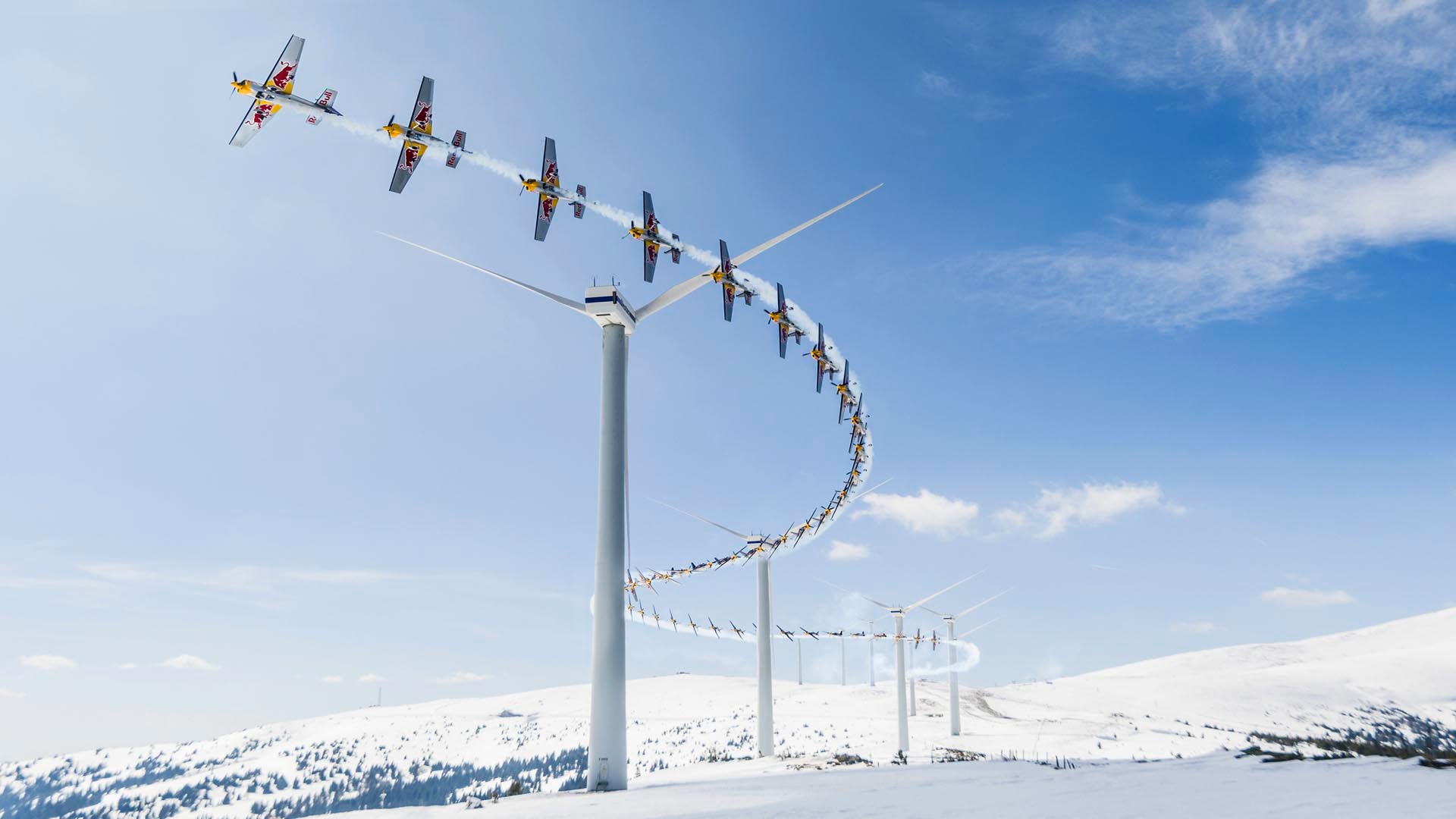
Aerobatic pilot Hannes Arch flies an impressive obstacle course through a wind farm in Austria. Red Bull Air Race pilot flew this course in Tauern wind park in Oberzeiring, Austria.

This stunt is more dangerous than most Red Bull obstacle courses for many reasons. First of all, the pylons at the Red Bull courses are inflatable, so the airplane can hit them without suffering damage. However, clipping one of these turbine blades would have devastating consequences. These windmills are also taller than the Red Bull pylons, standing at 60 meters tall (230 feet). An additional challenge was that the terrain the windmills were built on is not even and situated on a ridge that is far from perfectly flat.

He was flying this course exceptionally fast, at 152 knots (280 km/h) and pulling 5.5 G’s in the turn.

The video shows adrenaline-rich flying footage.

The airplane is an Edge 540 V3. Read about Hannes Arch here.

Posted on

Strong Crosswinds Challenge Turboprops: video

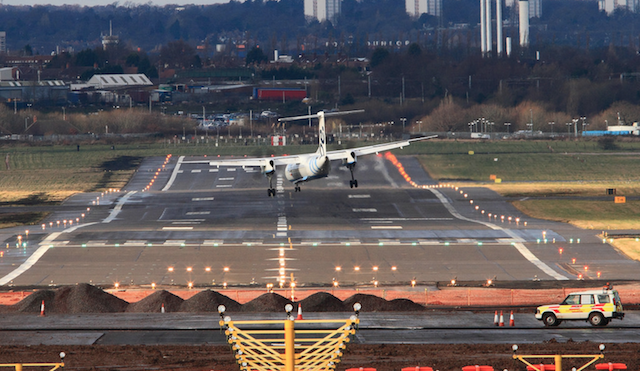
Stiff crosswinds and an uneven runway make for challenging landings at Birmingham Airport in the United Kingdom, causing some airliners to overshoot.

In recent months, pilots have encountered some heavy skill-testing conditions as strong crosswinds and gusty winds pummelled the runway area.

Can you see how these airliners are using a crab crosswind landing approach?

Watch as a 767 makes a difficult crosswind landing, testing the limits of the landing gear.

Posted on

Boeing 787 Dreamliner near vertical takeoff

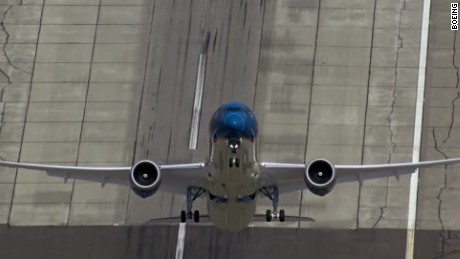
In preparation for the Paris Air show, the Boeing 787 Dreamliner in Vietnam Airlines livelry performed some amazing aerial work, particularly impressive is the near vertical takeoff, shown in this video.

The 787-9 is rehearsing for the Paris air show which is being held this week. It’s unusual for an airliner to perform such a steep climb, but the video displays the 787’s ability to perform a beautiful, aggressive takeoff.

Paris air show 2015 “dream” display is shown here from the Boeing test pilot’s perspective.  The company’s team of test pilot put together an impressive routine that shows off what the 280 passenger, $250 million airplane can really do.

The Paris air show runs from June 15 until Sunday, June 21 at Le Bourget airport.

The 787 used in the performance will join a fleet of 19 787-9 airplanes already in the Vietnam Airways fleet.

Posted on

Cessna 172 makes emergency landing on Quebec highway

A few months ago a Cessna 172 experienced engine problems and was forced to make an emergency landing on a Quebec highway.

The footage is from an onboard camera that films the entire landing. The pilots did a great job and no one was hurt in the incident.  The plane touched down on highway 10.

The pilots immediately establish a glide an execute successful forced approach, in traffic.